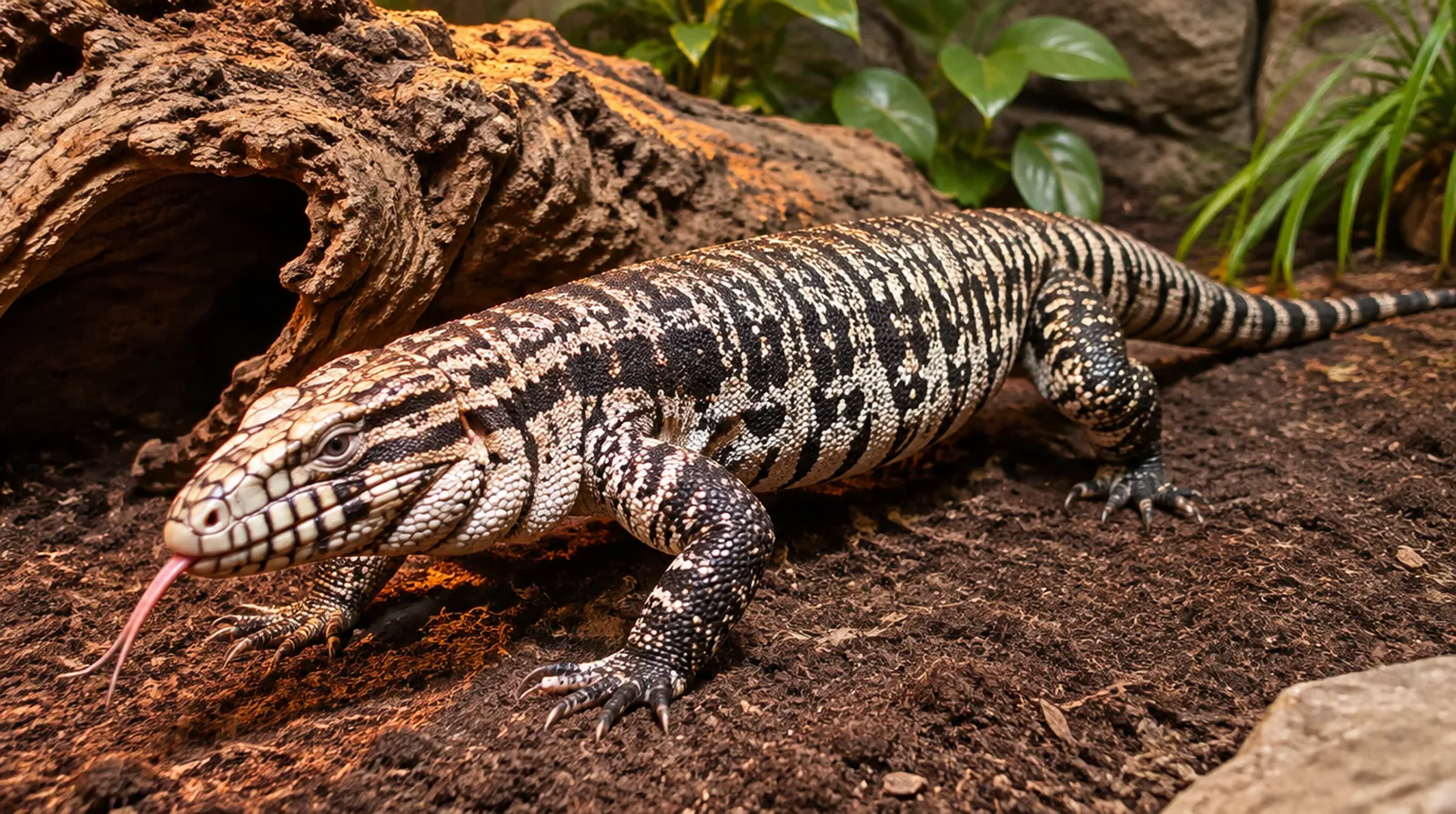
Legal note. Argentine tegus are invasive in parts of Florida, which added them to its prohibited species list in 2021, so new pet ownership there is heavily restricted. Other places restrict them too, and they're listed on CITES Appendix II. Check your local rules before buying.
Is a tegu right for you?
The Argentine black and white tegu (Salvator merianae) lives across eastern and central South America, from grassland to forest edges. Captive-bred tegus are known for their intelligence and for becoming tame, even food-motivated and responsive to their keepers.
But they're big, strong and demanding: a large enclosure, a cluster of powerful heat lamps, deep substrate and a varied diet. Expect a 15–20+ year commitment and a lizard that can weigh 10 lb or more.
Enclosure
| Tegu | Enclosure |
|---|---|
| Hatchling | 4×2×2 ft, temporarily |
| Juvenile | 6×2×2 ft or larger |
| Adult (minimum) | 8×4×4 ft (240×120×120 cm) |
Tegus are terrestrial burrowers. Use a sturdy, front-opening enclosure (PVC or custom-built), several hides including one deep enough to brumate in, cork logs, and a water tub big enough for the tegu to soak its whole body.
Heating
- Basking surface: 125–135°F (52–57°C), measured with an infrared thermometer
- Cool side: 75–85°F (24–29°C)
- Night: about 68–74°F (20–23°C); lights off
A single bulb won't heat an area big enough for an adult. Most keepers use a cluster of halogen flood bulbs (often 3–4) over a flat stone basking area, controlled by a dimming thermostat.
Lighting and UVB
UVB is essential. Use a T5 HO 10–12% tube spanning most of the enclosure length, with the basking surface at the distance the maker recommends. Run lights 12–14 hours a day and replace UVB tubes every 12 months.
Humidity and substrate
Keep humidity around 60–80%. Use 8–12 inches of a moisture-holding soil/sand mix or cypress mulch that holds burrows. Moisten the lower layers rather than soaking the surface, and mist as needed.
Diet
Tegus are omnivores. Hatchlings and juveniles eat more animal protein; adults should get more variety.
- Protein: whole prey (thawed mice, rats, chicks), insects (dubia roaches, superworms, crickets), fish, eggs, lean poultry
- Plants: fruits (berries, figs, papaya, mango) and some vegetables and greens
- Feed less fruit to adults to prevent obesity
| Age | Frequency |
|---|---|
| Hatchling / juvenile | Daily |
| Adult | 2–3 times per week |
Dust non-whole-prey meals with calcium, and add a multivitamin weekly.
Brumation
Argentine tegus naturally brumate for about 3–5 months in autumn and winter, even when kept indoors. They stop eating and sleep in a hide. Make sure your tegu is healthy and has emptied its gut first, provide water, reduce heat as it slows down, and check it regularly. A vet check before the first brumation is a good idea.
Handling
Start young and keep sessions short and calm. Many tegus become very tame. Adults have a powerful bite and sharp claws, so learn their body language (huffing, tail-whipping) and respect it.
Common mistakes
- Enclosure far too small.
- Basking surface too cool or too small an area.
- Shallow substrate.
- All-fruit or all-meat diets.
- Panicking about normal brumation.
Signs of a healthy tegu
Active, alert, strong appetite outside brumation, clean sheds and a firm (not obese) body. Swollen limbs, a soft jaw, mouth discharge or weight loss need a reptile vet.
FAQ
What size enclosure does an Argentine tegu need? 8×4×4 ft minimum for one adult.
What temperature does a tegu need? Basking surface 125–135°F (52–57°C); cool side 75–85°F (24–29°C).
Do tegus brumate? Yes, for a few months each winter. It's normal.