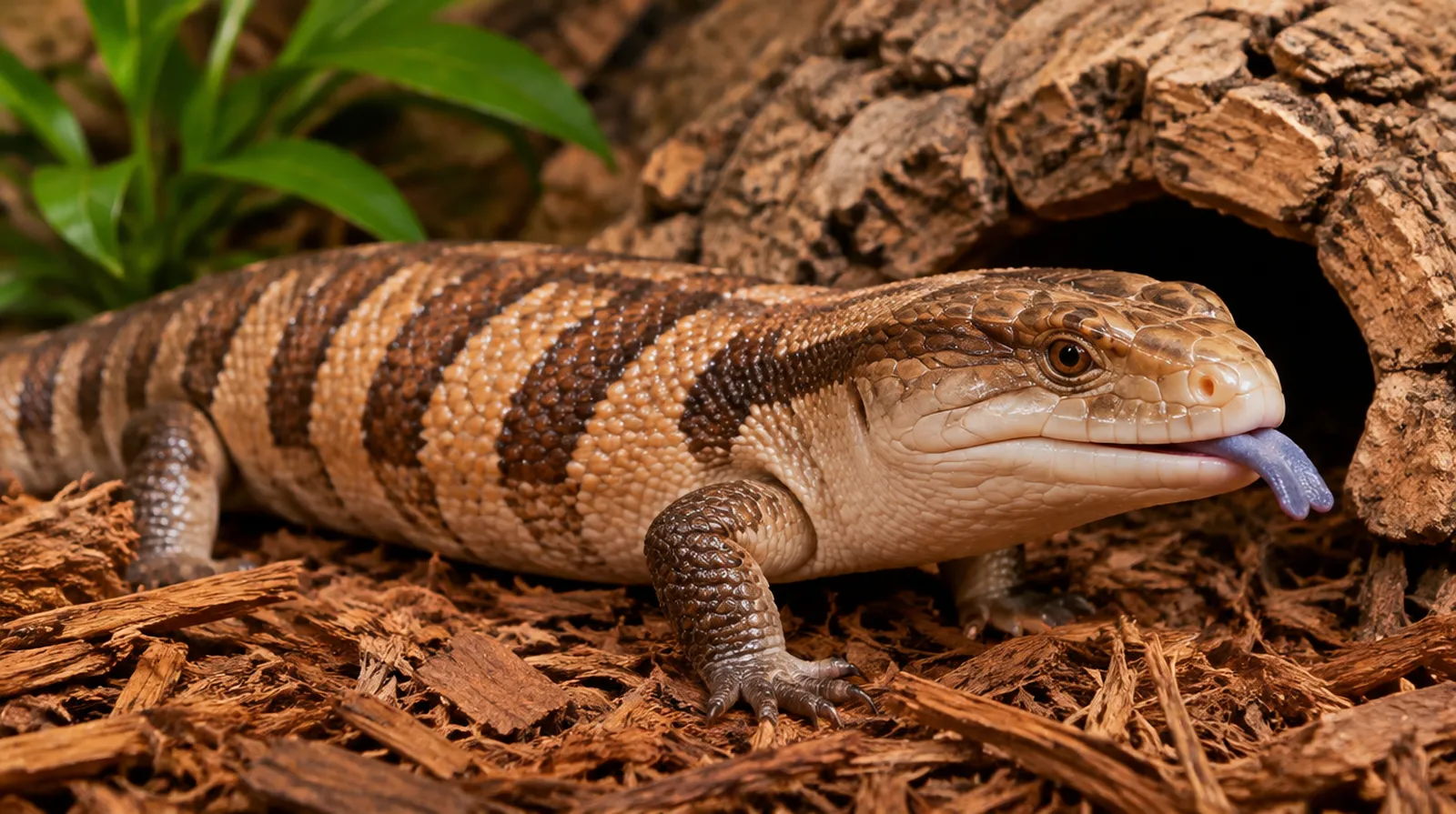
Is a blue-tongued skink right for you?
Blue-tongued skinks (Tiliqua species) are chunky, short-legged lizards from Australia, Indonesia and New Guinea. The most common pet is the Northern blue-tongued skink (T. scincoides intermedia), which is captive-bred in large numbers. Indonesian types (Kei Island, Halmahera, Merauke and others) are often imported.
They're calm, diurnal, easy to feed and usually happy to be handled once settled. The trade-offs: they need a big enclosure, strong heat and UVB, and live for 15–20 years or more.
Australian vs Indonesian skinks
Australia bans wildlife export, so Australian species in the trade are captive-bred. Indonesian skinks are frequently wild-caught imports: they're more likely to be stressed, defensive and carrying parasites, and they need higher humidity. Ask the seller which you're getting, and get a fecal test for any imported animal.
Enclosure
| Skink | Enclosure |
|---|---|
| Juvenile | 36×18×18 in, temporarily |
| Adult (minimum) | 4×2×2 ft (120×60×60 cm) |
| Adult (better) | 6×2×2 ft or larger |
Add a hide on each side, a large shallow water dish, cork logs and clutter they can push through and burrow under.
Heating
- Basking surface: 100–105°F (38–41°C)
- Cool side: 75–80°F (24–27°C)
- Night: 65–75°F (18–24°C); lights off
Use a halogen flood bulb over a flat basking stone, controlled by a dimming thermostat. Measure the basking surface with an infrared thermometer.
Lighting and UVB
Blue-tongued skinks need UVB. Use a T5 HO 5–7% tube (or 10–12% mounted higher or over mesh) covering about half the enclosure on the warm side. Replace it every 12 months. Run lights 12–14 hours a day.
Humidity
- Australian types (Northern, Eastern, Blotched): 40–60%
- Indonesian types: 60–80%
Keep the substrate slightly moist deeper down so burrows are humid while the surface stays drier. Low humidity causes stuck shed, especially on toes and tail tips.
Substrate
Use 4–6 inches of a soil/sand mix, cypress mulch or a bioactive mix. Skinks love to burrow. Avoid loose pure sand and cedar or pine.
Diet and feeding
| Food group | Share | Examples |
|---|---|---|
| Animal protein | ~50% | Dubia roaches, crickets, snails, cooked lean meat, eggs, a little high-quality wet dog/cat food |
| Vegetables and greens | ~40% | Collard, mustard and turnip greens, squash, bell pepper, green beans |
| Fruit and flowers | ~10% | Berries, papaya, hibiscus flowers |
| Age | Frequency |
|---|---|
| Juvenile | Daily or near-daily |
| Adult | 2–3 meals per week |
Dust with calcium a few times per week and a multivitamin weekly. Skinks get overweight easily: if your skink's belly drags and its legs look short, feed less often.
Handling
Most blue-tongued skinks become very tame. Scoop from below and support the whole body. A hiss and a flash of the blue tongue is a bluff, but respect it and give a stressed skink time.
Common mistakes
- Enclosure too small.
- No UVB or a UVB bulb that's past its lifespan.
- Overfeeding fatty foods like dog food.
- Too-dry conditions for Indonesian skinks.
- Skipping a fecal check on imported animals.
Signs of a healthy skink
Alert and active during the day, rounded but not obese body, clean sheds, regular droppings and a good appetite. Wheezing, mouth swelling, lethargy or weight loss need a reptile vet.
FAQ
What size enclosure does a blue-tongued skink need? 4×2×2 ft minimum; 6×2×2 ft is better.
What do they eat? About 50% animal protein, 40% veg and greens, 10% fruit or flowers.
Do they need UVB? Yes, a T5 HO UVB tube over the basking area.