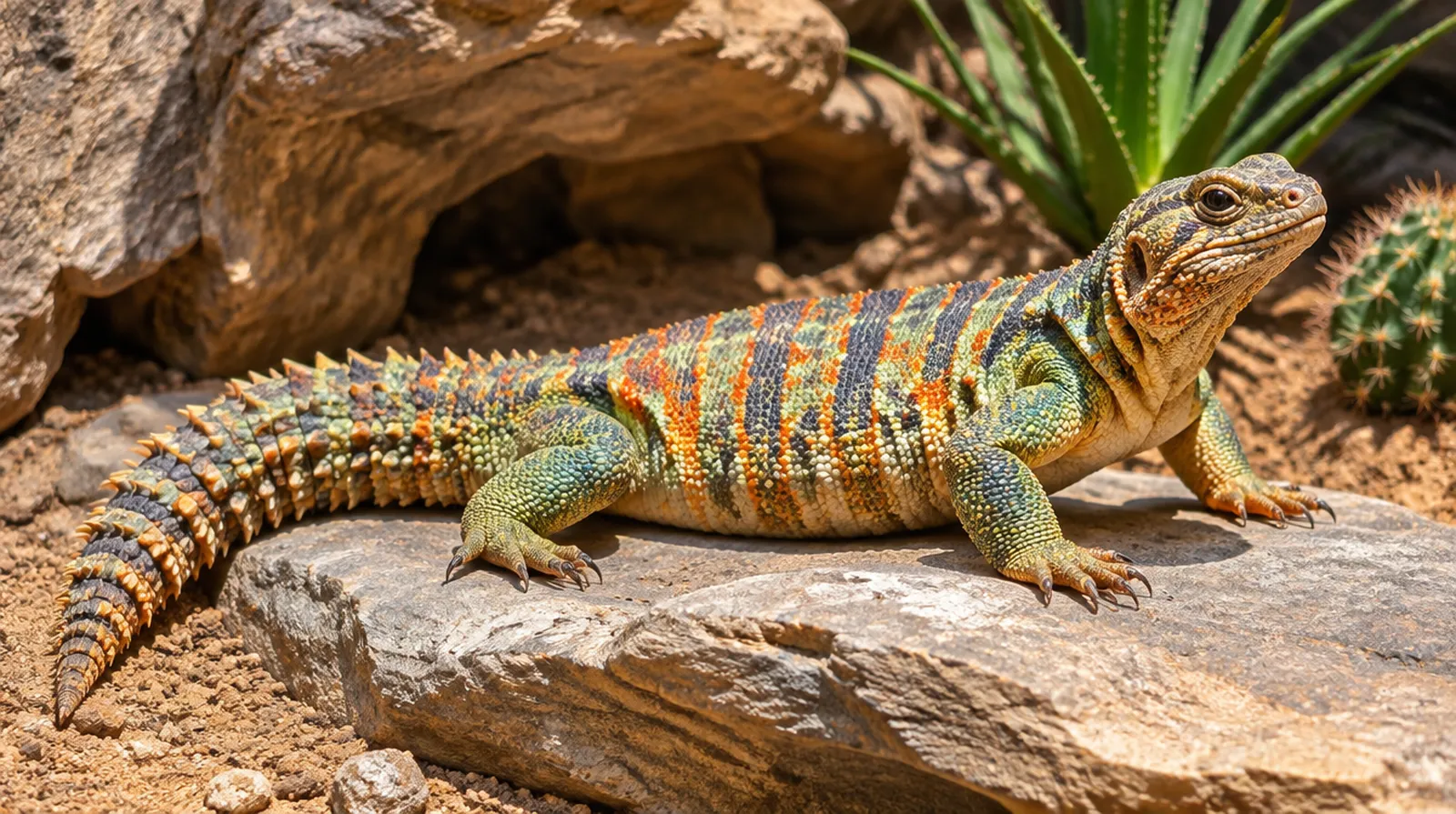
Is a uromastyx right for you?
Uromastyx, or spiny-tailed lizards, live in the deserts of North Africa and the Middle East. Popular species include the Mali / Saharan (U. geyri), ornate (U. ornata), Moroccan (U. nigriventris) and the much larger Egyptian uromastyx (U. aegyptia). Care is similar across species, but size varies.
They're diurnal, active and herbivorous, so no live insects to keep. The challenge is replicating the desert: very hot basking surfaces, intense UVB and dry air. Many uromastyx in the trade are wild-caught, so look for captive-bred animals with CITES paperwork (they're on CITES Appendix II / EU Annex B).
Enclosure
| Lizard | Enclosure |
|---|---|
| Juvenile | 36×18×18 in |
| Adult of most species (minimum) | 4×2×2 ft (120×60×60 cm) |
| Species over 24 in (e.g. Egyptian) | 6×3×3 ft minimum |
Uromastyx dig, so build rockwork on the enclosure floor (not on top of substrate) and secure stacked rocks with silicone or foam so they can't collapse onto a burrowing lizard. A flat slab of flagstone or slate under the heat makes an ideal basking surface. Keep one uromastyx per enclosure.
Heating
- Basking surface: 120–130°F (49–55°C), measured with an infrared thermometer
- Cool side: about 80–85°F (27–29°C)
- Night: 65–75°F (18–24°C)
Use halogen flood bulbs over the basking slab on a dimming thermostat. These temperatures sound extreme, but uromastyx need them for digestion and activity.
Lighting and UVB
Uromastyx need strong UVB. Use a T5 HO 12–14% desert tube about half the length of the enclosure on the warm side. If mounted over mesh, the lizard's back on the basking spot should be roughly 8–13 in below the lamp; inside the enclosure, about 14–20 in. Run 12–14 hours of light a day and replace the tube every 12 months.
Humidity
Keep it dry: about 10–30%. A deeper, slightly moist layer in the substrate or a humid burrow is fine, but avoid misting the enclosure. Many uromastyx rarely drink from a dish; they get most water from greens, so offering fresh greens daily is important.
Substrate
Use a packed soil/sand mix deep enough to dig (ideally 6+ inches in part of the enclosure). Avoid calcium sand and walnut shell.
Diet
Uromastyx are herbivores; insects aren't needed.
- Daily greens and weeds: collard, mustard and turnip greens, dandelion, endive, escarole, prickly pear pads, hibiscus leaves and flowers.
- Some vegetables: squash, bell pepper, green beans.
- Dry foods: lentils, split peas, mixed seeds (millet, birdseed mixes), offered in a dish a few times a week or available at all times for adults.
- Avoid: fruit in quantity, high-oxalate spinach, iceberg lettuce, animal protein.
Dust greens with calcium a few times per week and a multivitamin weekly.
Handling
Captive-bred uromastyx often become tame. Wild-caught adults may stay skittish and tail-whip. Scoop from below and support the body.
Common mistakes
- Basking surface too cool.
- Weak or old UVB.
- Humid enclosures and daily misting.
- Unstable rock stacks.
- Feeding insects or lots of fruit.
Signs of a healthy uromastyx
Bright colours when warm, active basking, good appetite and firm droppings. Sunken eyes, a kinked tail, a soft jaw, lethargy or nasal discharge need a reptile vet. (A little white salt crust around the nostrils is normal — they excrete salt through nasal glands.)
FAQ
How hot should the basking spot be? 120–130°F (49–55°C) surface.
What size enclosure? 4×2×2 ft for most species; 6×3×3 ft for those over 24 in.
What do uromastyx eat? Leafy greens, weeds, flowers, lentils and seeds.