The short answer
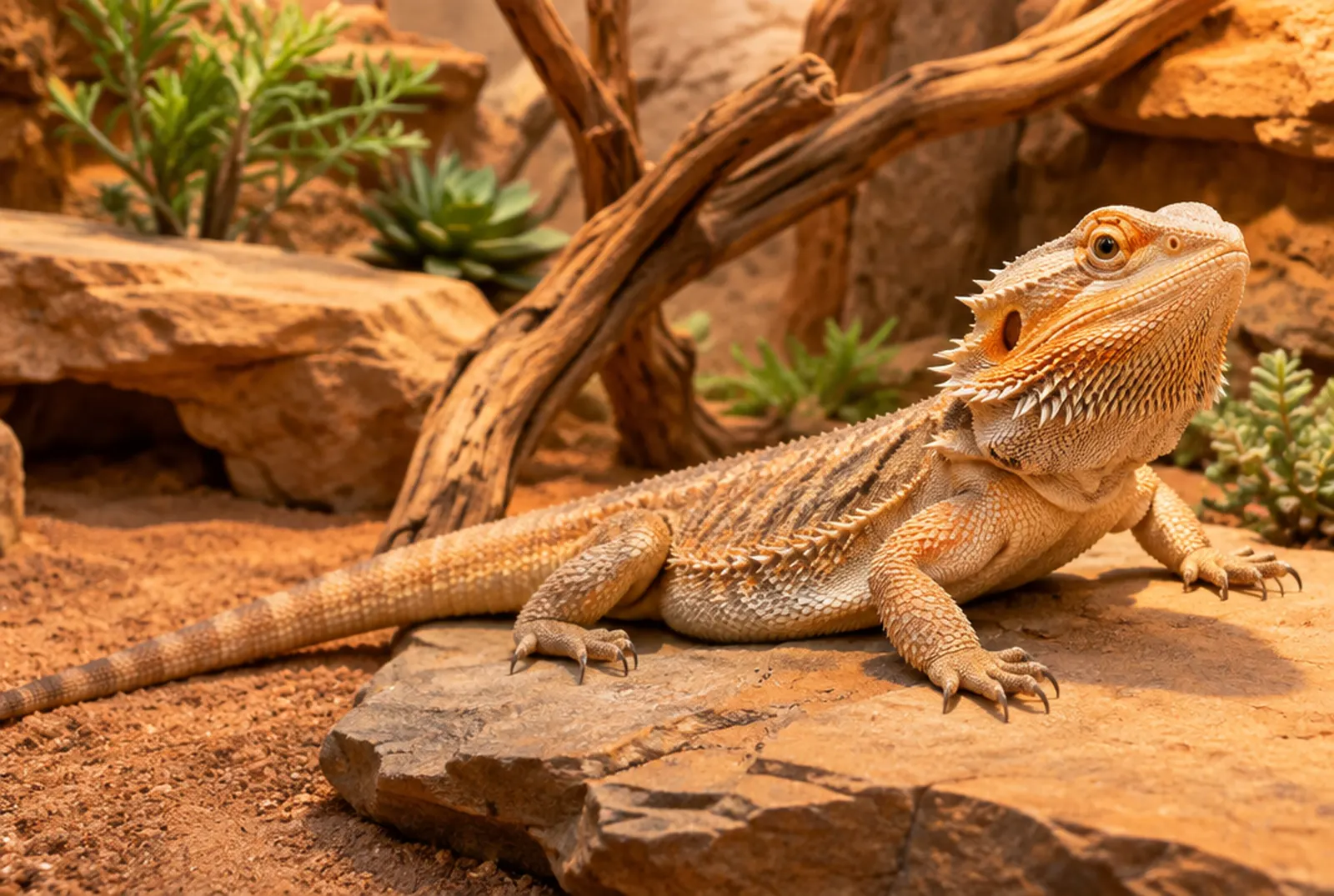
Bearded dragons eat insects and plants. The balance changes with age:
| Age | Insects | Plants | Feeding |
|---|---|---|---|
| Baby (0–4 months) | ~70–80% | ~20–30% | Insects 2–3 times daily, greens daily |
| Juvenile (4–12 months) | ~50% | ~50% | Insects once or twice daily, greens daily |
| Adult (12+ months) | ~20–30% | ~70–80% | Insects 2–3 times a week, greens daily |
These are guidelines, not strict rules. An adult that's getting heavy needs fewer insects and more greens. See the bearded dragon care sheet for the full setup.
Best staple greens (feed daily)
These make up most of an adult dragon's diet. Chop them small and rotate several:
- Collard greens
- Mustard greens
- Turnip greens
- Dandelion leaves and flowers (unsprayed)
- Endive and escarole
- Cactus pads (prickly pear / opuntia), spines removed
- Hibiscus leaves and flowers
- Squash (butternut, acorn), grated
- Bell pepper
Occasionally: kale, bok choy, carrot, green beans, peas, watercress, cilantro and parsley. These are fine in rotation but shouldn't be the base of every meal.
Best feeder insects
| Insect | Use |
|---|---|
| Dubia roaches | Excellent staple; high protein, easy to keep |
| Black soldier fly larvae | Staple; naturally high in calcium |
| Crickets | Staple; good for hunting behaviour |
| Silkworms | Staple; soft and nutritious |
| Hornworms | Treat; very hydrating |
| Superworms, waxworms | Occasional treats only (high fat) |
Rules for insects:
- Size: no bigger than the space between the dragon's eyes.
- Gut-load insects for 24 hours before feeding.
- Dust with calcium (most feedings for babies, a few times a week for adults) and a multivitamin about once a week.
- Never feed wild-caught insects: they can carry pesticides and parasites.
- Remove uneaten crickets; they can bite a sleeping dragon.
Fruit (treats only)
Fruit is high in sugar, so keep it to a small portion once or twice a week at most: berries (blueberries, strawberries, raspberries), papaya, mango, figs, apple (no seeds), melon. Avoid citrus.
Foods to avoid
| Food | Why |
|---|---|
| Avocado | Toxic |
| Rhubarb | Toxic (very high oxalate) |
| Onion, garlic, chives | Can damage red blood cells |
| Fireflies / lightning bugs | Toxic, can be fatal |
| Wild-caught insects | Pesticides and parasites |
| Spinach, beet greens (often) | High oxalates bind calcium |
| Iceberg lettuce | Almost no nutrition |
| Dog/cat food, meat, dairy, bread | Not part of a dragon's diet |
How much should a bearded dragon eat?
- Babies: as many appropriately sized insects as they eat in about 10–15 minutes, 2–3 times a day.
- Juveniles: the same approach, once or twice a day.
- Adults: a small salad daily and a handful of insects (roughly 10–20 small items, depending on the dragon) 2–3 times a week.
Healthy adults should have a rounded but not bulging body, fat pads on the head that aren't swollen, and visible hip bones without sharp angles.
Why calcium and UVB matter
Bearded dragons need calcium and UVB to use it. Without strong UVB, even a perfect diet can lead to metabolic bone disease. Use a T5 high-output UVB tube, replaced every year (see our bearded dragon UVB guide).
FAQ
What do bearded dragons eat every day? Fresh greens daily, plus insects: daily for babies and a few times a week for adults.
Can bearded dragons eat fruit? Yes, as a small, occasional treat.
What foods are dangerous? Avocado, rhubarb, onion, garlic, fireflies and wild-caught insects. Limit spinach.