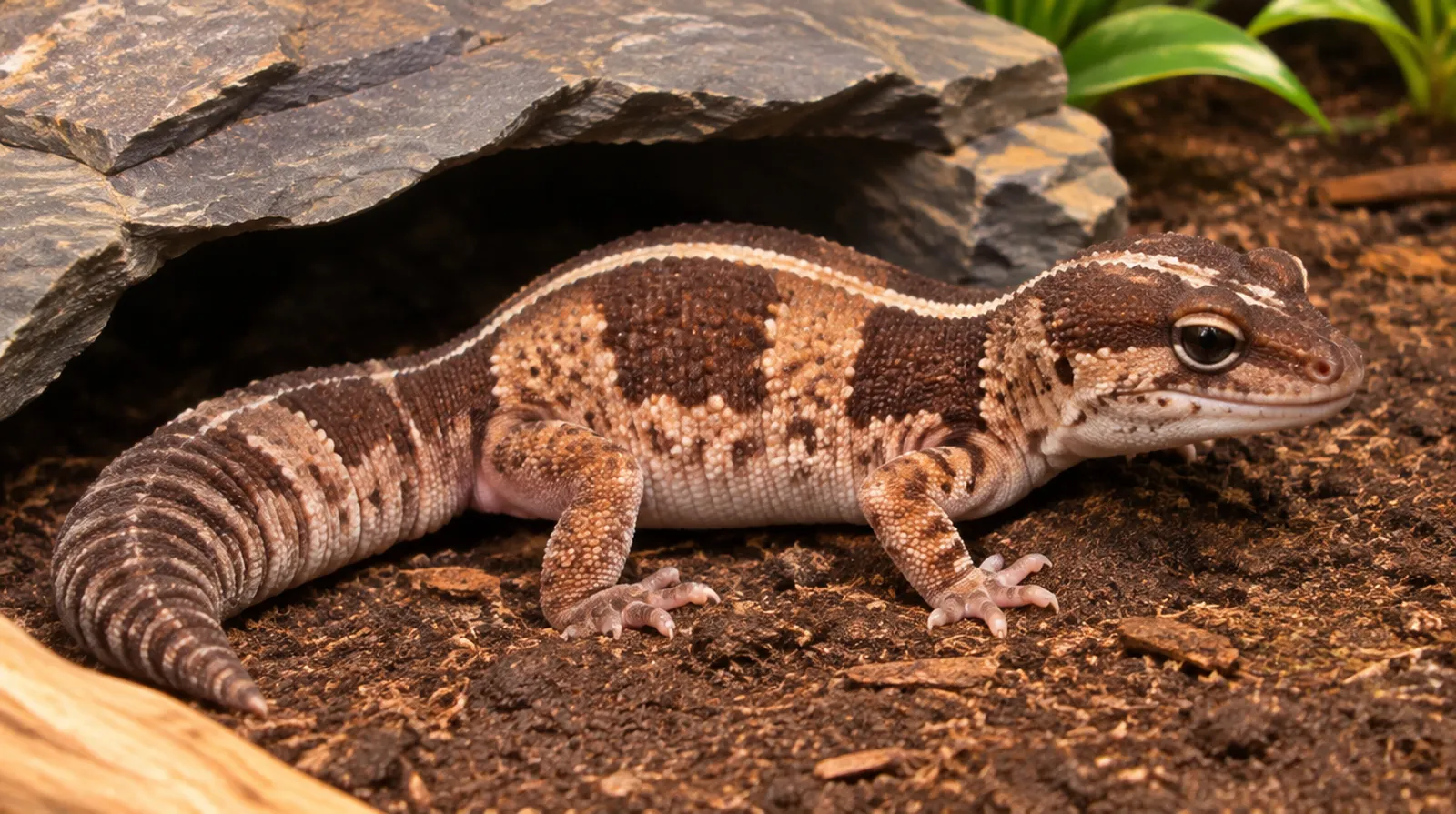
Is an African fat-tailed gecko right for you?
The African fat-tailed gecko (Hemitheconyx caudicinctus) lives in West Africa, from Senegal to Cameroon, in dry forest and savanna. It's nocturnal, terrestrial and stores fat in its thick tail. Morphs include the wild-type banded and striped patterns, plus colour morphs such as amel (albino), oreo and aberrant patterns.
They're one of the easiest geckos to keep: placid, tolerant of handling and good eaters. The main thing people get wrong is treating them exactly like leopard geckos and keeping them too dry.
Enclosure
| Gecko | Enclosure |
|---|---|
| Juvenile | 24×18×12 in |
| Adult (minimum) | 36×18×18 in |
| Adult (better) | 48×24×24 in |
Provide at least three hides: warm, cool and humid (a hide packed with damp sphagnum moss). Add cork bark, leaf litter and low branches for enrichment.
Heating
- Warm side surface (under the heat source): 88–92°F (31–33°C)
- Cool side: 72–78°F (22–26°C)
- Night: 70–75°F (21–24°C)
Use a halogen bulb or deep heat projector above the warm hide, or a heat mat under it, always on a thermostat.
Lighting
Low-level UVB (a 5–7% or ShadeDweller-type tube) with plenty of shade is recommended. Run lights 12 hours a day.
Humidity
Aim for 50–70% ambient. Lightly mist the substrate in the evening and keep the humid hide damp at all times. Low humidity leads to retained shed, especially around toes and the tail tip, which can cut off circulation.
Substrate
A soil/sand mix with leaf litter (or a bioactive setup) holds humidity and lets them dig a little. Paper towel is fine for quarantine.
Feeding
| Age | Food | Frequency |
|---|---|---|
| Juvenile | Small crickets, dubia, mealworms | Daily |
| Adult | Crickets, dubia, mealworms, silkworms, occasional waxworms | 2–3 times per week |
Gut-load insects and dust with calcium at most feedings, plus a multivitamin weekly. A healthy adult has a plump tail; a thin tail means it needs feeding more or a vet check.
Housing
Keep alone, or keep females together in a larger enclosure with close monitoring. Never house two males together.
Handling
Fat-tailed geckos are typically calm and slow. Let them walk from hand to hand. Like leopard geckos, they can drop their tails when grabbed or stressed; it regrows, but it costs them their fat reserves.
Common mistakes
- Keeping them as dry as a leopard gecko.
- No humid hide.
- Heat without a thermostat.
- Housing males together.
Signs of a healthy fat-tailed gecko
Thick tail, clear eyes, complete sheds, active at dusk. Stuck shed, a thinning tail, a soft jaw or lethargy need a reptile vet.
FAQ
Fat-tailed vs leopard gecko? Similar care, but fat-tailed geckos need higher humidity (50–70%).
What size tank? 36×18×18 in minimum for an adult.
What humidity? 50–70%, plus a humid hide.