Step 1: Measure properly
Before changing anything, get an accurate reading. Use a digital hygrometer (ideally with a probe) at animal level, not stuck to the top glass. Check it at different times of day: humidity usually drops while lights and heat are on and rises at night.
Step 2: Know your target
| Species | Target humidity |
|---|---|
| Leopard gecko, bearded dragon | 30–40% (plus humid hide for geckos) |
| Rosy boa, uromastyx | 10–40% (dry) |
| Corn snake, California kingsnake | 40–60% |
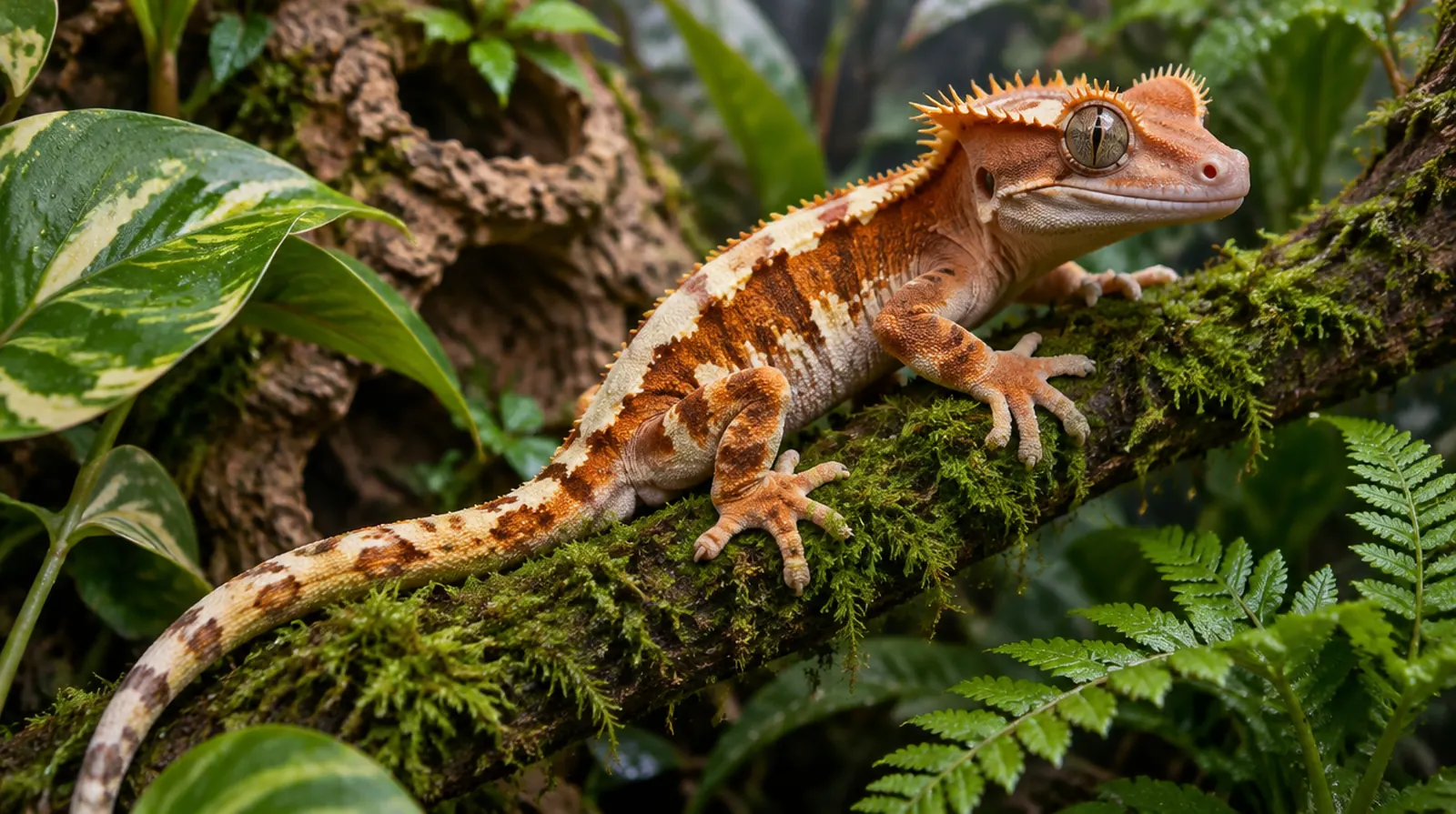
| Crested gecko, gargoyle gecko | 50–70%, with evening misting |
| Ball python | 60–80% |
| Chinese water dragon, mangrove snake | 60–80% |
Not sure? Look it up in our AI Care Finder.
8 ways to raise humidity
1. Use a moisture-holding substrate
The biggest single change. Coco fibre (coir), cypress mulch, soil mixes and sphagnum moss hold water and release it slowly. Aspen and paper towel stay dry. Mix water into the lower layers so it stays damp underneath while the surface is drier.
2. Add a humid hide
A hide packed with damp sphagnum moss gives a high-humidity spot without making the whole enclosure wet. Every gecko and snake should have one.
3. Cover part of a mesh top
Large mesh lids let humidity escape. Cover part of it with glass, acrylic, plastic sheet or foil tape, leaving some ventilation (especially over the warm side and lights).
4. Mist
Mist with dechlorinated water once or twice a day. For tropical species, a timer-controlled automatic misting system makes this consistent.
5. Move or enlarge the water dish
A bigger water dish on the warm side evaporates more. Keep it clean.
6. Add live plants
Live plants (pothos, philodendron, ferns) transpire moisture and make humidity more stable.
7. Use a fogger or humidifier carefully
Ultrasonic foggers raise humidity quickly but can make things too wet and grow bacteria if not cleaned. Use on a timer or hygrostat, and only with distilled water.
8. Go bioactive
A bioactive substrate with drainage layer, soil, leaf litter, plants and clean-up crew (springtails, isopods) holds humidity naturally and breaks down waste.
How to lower humidity that's too high
- Increase ventilation: uncover part of the lid or add vents.
- Switch to a drier substrate, or let the top layer dry out.
- Mist less often, and make sure the enclosure dries out between mistings.
- Use a smaller water dish or move it to the cool side.
- Check for mould, wet patches and standing water.
Constantly wet enclosures cause mould, skin infections and respiratory problems even in "humid" species. Most tropical reptiles do best with a daily cycle: high after misting, drying out over a few hours.
Common problems
- Humidity drops when the heat lamp is on: cover more of the lid and use moisture-holding substrate.
- Condensation on glass all day: too wet, increase ventilation.
- Bad sheds: see how to fix stuck shed.
FAQ
What is the fastest way to raise humidity? Mist and partly cover a mesh lid. For a lasting fix, use coco fibre or cypress substrate and a humid hide.
Do heat lamps lower humidity? Yes, especially with large mesh tops.
How do I measure humidity? A digital hygrometer with a probe at animal level.