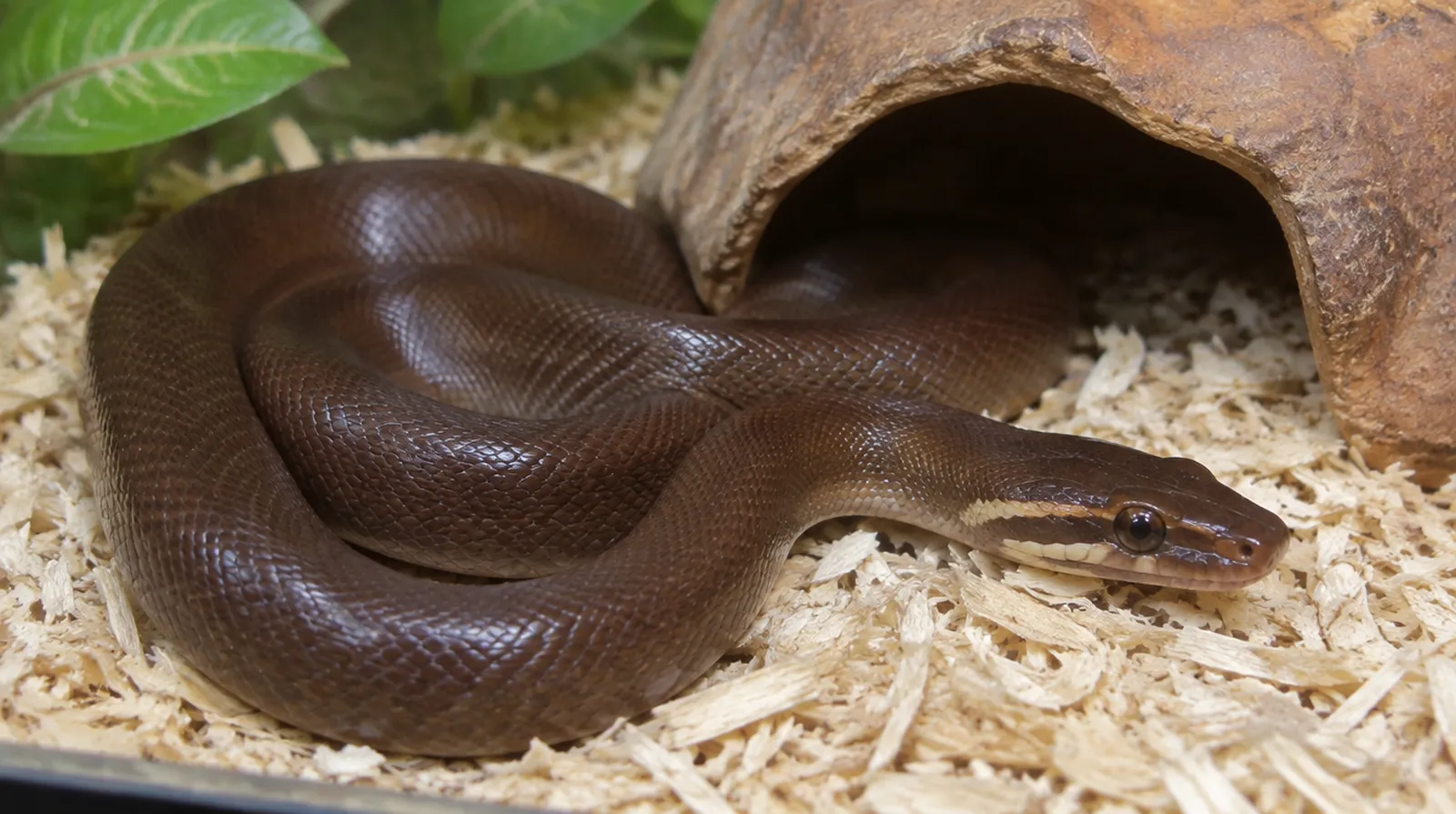
Is an African house snake right for you?
African house snakes (Boaedon species, previously Lamprophis) are found across sub-Saharan Africa, from grassland to towns, where they're welcome visitors because they eat rodents. The most common pet is the brown house snake (Boaedon fuliginosus and related species), bred in colours from wild-type brown to albino, red and hypo.
They're non-venomous, compact and voracious feeders. Their quirks: they're fast, hatchlings can be nippy, and they'll escape through surprisingly small gaps.
If you live within their natural range (for example in South Africa), note that wild collection needs a provincial permit. Buy captive-bred.
Enclosure
| Snake | Enclosure |
|---|---|
| Hatchling | 10–20 gallon / small tub |
| Adult male | 36×18×18 in minimum |
| Adult female | 48×24×24 in minimum |
Use a secure, lockable lid and check gaps around cables and vents. Provide a hide on each end, a humid hide, branches and clutter for cover, and a water dish.
Heating
- Warm side / basking surface: 85–90°F (29–32°C)
- Cool side: 72–78°F (22–26°C)
- Night: low 70s °F (21–23°C)
Use a guarded overhead heat source or a heat mat under the warm hide, on a thermostat.
Lighting
UVB is optional; low-level UVB and a 12-hour light cycle are fine additions.
Humidity
Around 40–60%, with a humid hide of damp moss for shedding.
Substrate
Aspen, cypress mulch or a soil mix. House snakes like to burrow under cover. Avoid cedar and pine.
Feeding
| Age | Prey | Frequency |
|---|---|---|
| Hatchling | Pinky mouse | Every 5–7 days |
| Juvenile | Fuzzy to hopper mouse | Every 7 days |
| Adult | Adult mouse | Every 7–14 days |
House snakes have a very strong feeding response. Feed with long tongs, and wash your hands before handling so you don't smell like dinner. They're prone to obesity if overfed, especially males.
Housing
House them alone. They may eat smaller snakes, and males fight.
Handling
Hatchlings are quick and may nip or musk out of fear. Short, frequent, calm sessions usually turn them into relaxed adults. Let the snake move hand to hand rather than restraining it.
Common mistakes
- Unsecured lids and gaps.
- Handling right after touching prey.
- Overfeeding.
- Housing with other snakes.
Signs of a healthy house snake
Glossy scales, clean sheds, steady appetite and alert behaviour. Mouth bubbles, wheezing, retained eye caps or weight loss need a reptile vet.
FAQ
How big do African house snakes get? Males 2–3 ft; females 3–4 ft.
What size enclosure? Males 36×18×18 in; females 48×24×24 in.
Good for beginners? Yes: hardy, easy to feed and usually calm as adults.