General feeding rules
| Age | Typical frequency |
|---|---|
| Hatchling | Every 5–7 days |
| Juvenile | Every 7–10 days |
| Adult | Every 10–14 days (many pythons and boas: every 2–4 weeks) |
Prey size: about as wide as the widest part of the snake's body. If you can see a large lump for more than a day, the meal was too big.
Body condition matters more than the calendar. A healthy snake has a gently rounded body. A snake with fat rolls when it bends, or a body that looks flat and "squared" on top, is overweight; visible spine and ribs mean underweight.
Feeding chart by species
| Snake | Adult size | Diet | Feeding schedule |
|---|---|---|---|
| Ball python | 3–5 ft (90–150 cm) | Frozen-thawed rodents (mice/rats) | Hatchlings every 5–7 days; juveniles every 7–10 days; adults every 2–4 weeks; prey no wider than the widest part of the body (~10% body weight) |
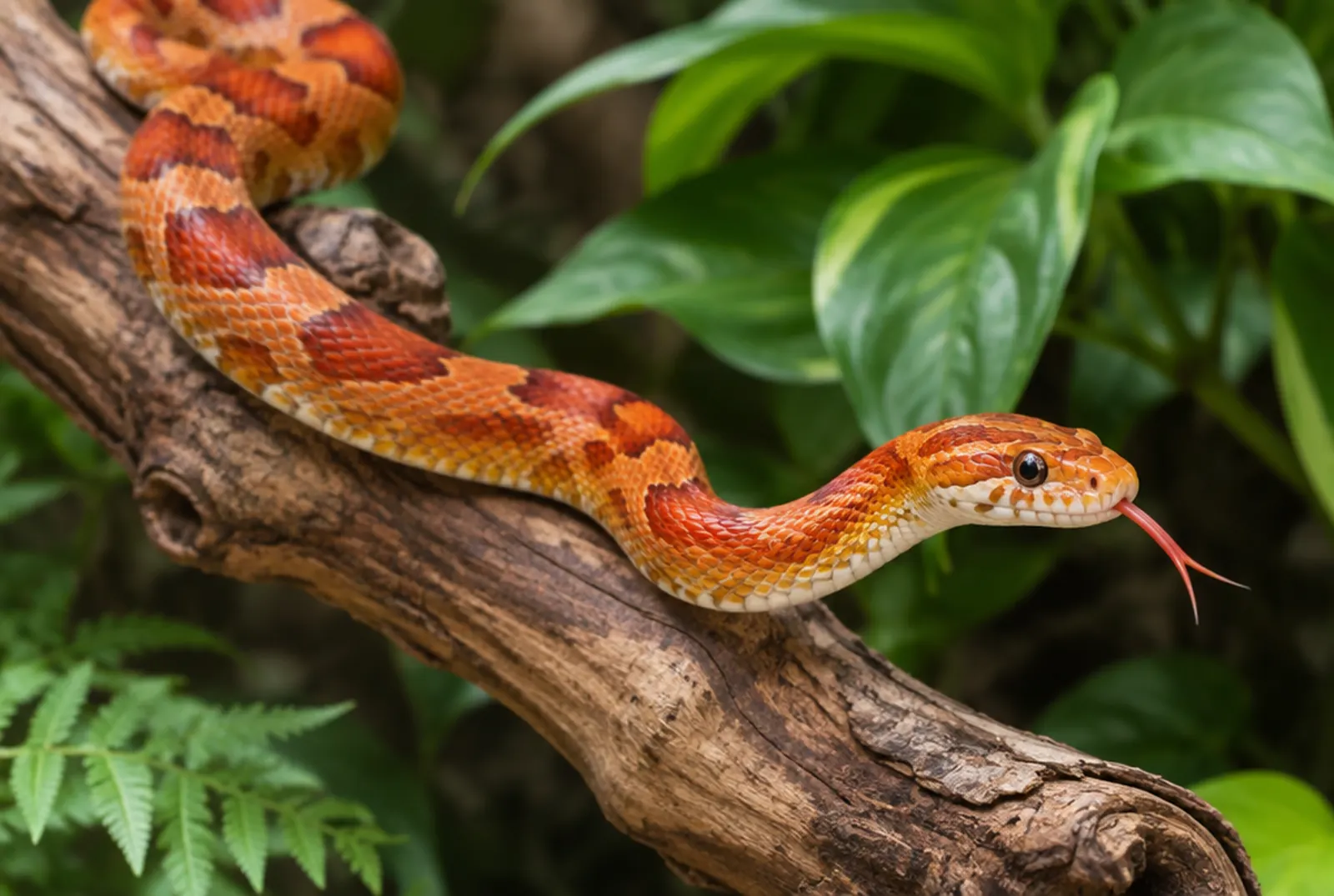
| Corn snake | 3–5 ft (90–150 cm) | Frozen-thawed mice | Hatchlings: pinky every 5–7 days; juveniles: fuzzy/hopper every 7–10 days; adults: adult mouse every 10–14 days |
| Burmese python | 12–16+ ft (3.5–5 m), 100+ lb | Frozen-thawed rodents, then rabbits for adults | Hatchlings every 5–7 days; juveniles every 7–10 days; adults every 2–4 weeks; watch for obesity |
| Milk snake | 2–5 ft depending on subspecies | Frozen-thawed mice | Hatchlings every 5–7 days; juveniles every 7–10 days; adults every 10–14 days |
| False water cobra | 6–8 ft (females up to ~10 ft) | Frozen-thawed rodents; occasional fish/frogs (avoid relying on thiaminase-rich fish like smelt or goldfish) | Juveniles every 5–7 days; adults every 10–14 days; prone to obesity |
| Western hognose snake | Males 14–24 in, females 24–36 in | Frozen-thawed mice; scent with toad/frog scent or fish juice for picky eaters | Hatchlings/juveniles every 5–7 days; adults every 7–14 days |
| Kenyan sand boa | Males ~15–18 in; females 24–32 in | Frozen-thawed mice | Juveniles every 5–7 days; adult males every 10–14 days; adult females every 7–14 days |
| Rosy boa | 2–3 ft (60–90 cm) | Frozen-thawed mice | Juveniles every 7 days; adults every 10–14 days (smaller meals — prone to obesity) |
| California kingsnake | 3–4 ft (90–120 cm) | Frozen-thawed mice | Hatchlings every 5–7 days; juveniles every 7–10 days; adults every 10–14 days |
| African house snake | Males 2–3 ft; females 3–4 ft (sometimes up to 5 ft) | Frozen-thawed mice | Hatchlings every 5–7 days; adults every 7–14 days |
| Mangrove snake | 5–6 ft (1.5–1.8 m), occasionally larger | Frozen-thawed mice and small rats once established; some insist on chicks at first | Adults every 7–14 days |
These schedules come from our care sheets, so click a species for full details, including temperatures and enclosure size.
How to feed safely
- Use frozen-thawed prey. Thaw in the fridge or in a sealed bag in warm water; don't microwave.
- Warm it to around body temperature and offer with long tongs.
- Feed in the enclosure, ideally in the evening for nocturnal species.
- Don't handle for about 48 hours after a meal.
- Weigh your snake every few weeks to track growth and spot problems early.
Signs of overfeeding
- Fat rolls or folds of skin when the snake bends
- Regurgitation
- A snake that never seems to have a "waist"
Overweight snakes live shorter lives. Space meals out, or feed slightly smaller prey.
Signs of underfeeding
- Visible spine or ribs
- Loose skin and a flat, triangular body shape
- A snake that's always hunting and striking at the glass
Why snakes refuse food
Shedding, breeding season, cooler months, stress, wrong temperatures and the wrong prey type are all common reasons. For the most famous food-striker, see why your ball python isn't eating.
FAQ
How often should I feed my snake? Hatchlings every 5–7 days, juveniles every 7–10 days, most adults every 10–14 days or longer.
How big should prey be? About as wide as the widest part of the snake.
Frozen or live? Frozen-thawed is safer and more humane.