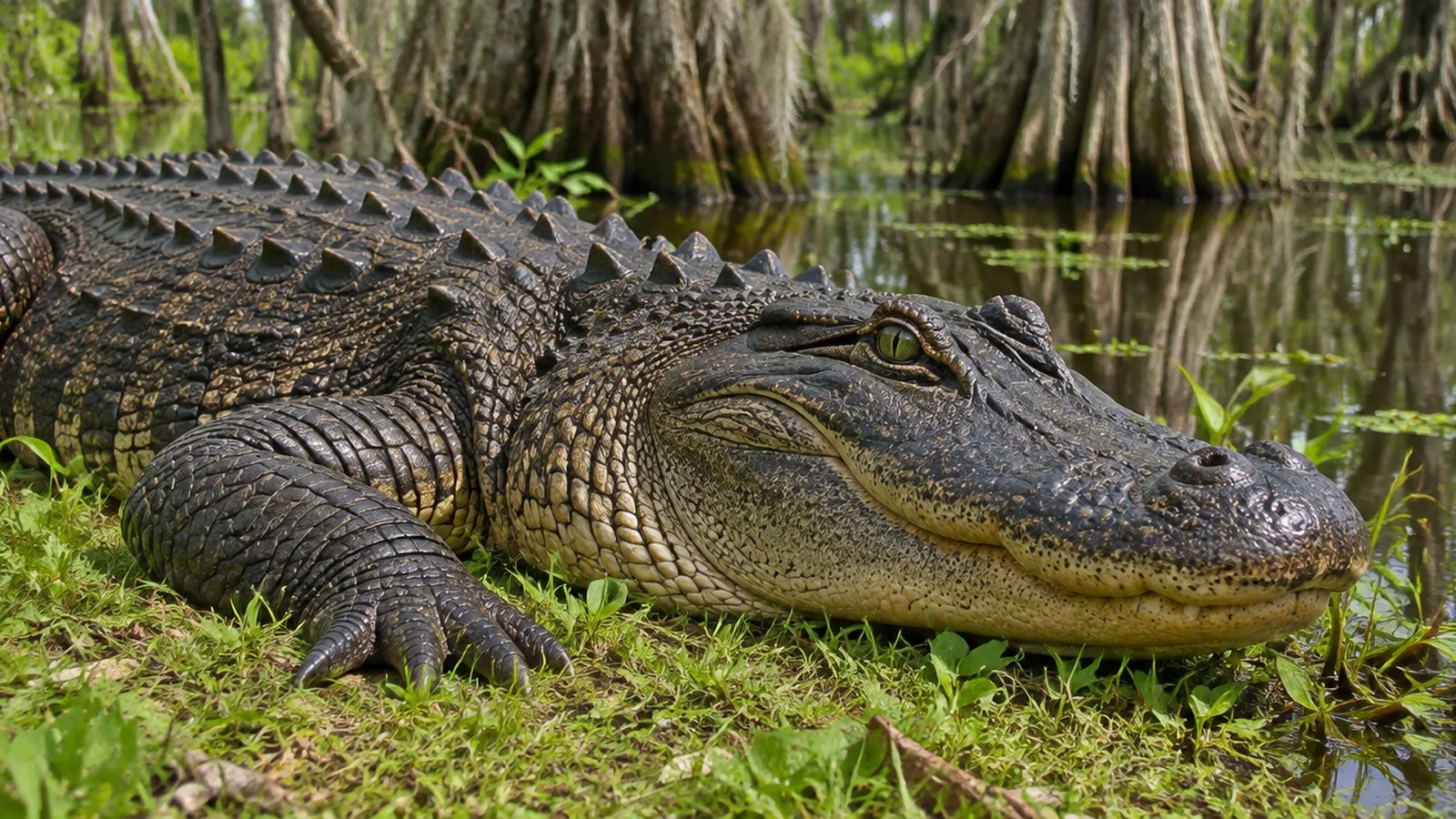
About the American alligator
The American alligator (Alligator mississippiensis) lives in the freshwater swamps, rivers, lakes and marshes of the south-eastern United States, from the Carolinas to Texas and throughout Florida. It's one of the great conservation success stories: once endangered by hunting and habitat loss, it has recovered to well over a million animals thanks to protection and careful management.
Hatchlings are only about 20–25 cm (8–10 in) long, with bright yellow bands on a black body, and that's where the problem starts. Baby alligators look manageable, but they grow quickly and become one of the largest reptiles in North America. Females usually reach around 2.5–3 m (8–10 ft), and males 3.5–4.5 m (11–15 ft), weighing well over 200 kg (450 lb). They can live for 35–50 years or more.
This page explains what an alligator really needs. The honest answer is that for almost every private keeper, an American alligator is not a realistic pet.
The law
In most places, keeping an alligator is either illegal or tightly controlled:
Many US states ban private ownership of alligators or require a special permit, secure facilities and inspections. In the UK, all crocodilians require a licence under the Dangerous Wild Animals Act, with secure housing, insurance and inspections. Many European countries, including Spain, restrict or prohibit keeping dangerous or potentially invasive animals, and American alligators are listed on CITES Appendix II, which controls international trade.
Before considering any crocodilian, check your national, regional and local laws, and speak to your local wildlife authority.
Enclosure
An adult alligator needs something closer to a zoo exhibit than a vivarium: a large, heated pond deep enough to fully submerge and swim, with a land area big enough for the entire animal to haul out and bask. For a single adult, that means a water area several times its body length in each direction and at least as deep as the animal is wide, plus a land area of similar size. Fencing and barriers must be strong, secure and high enough to keep both the alligator in and people out.
Juveniles can be raised in large aquarium or tub setups, but they outgrow them within a couple of years. Planning for the adult enclosure has to start before you get the animal.
Water quality
Alligators eat large meals and produce a lot of waste, so water quality is one of the biggest challenges. You'll need heavy-duty filtration, regular partial water changes and, ideally, a drain system to empty and refill the pond easily. Dirty water quickly causes skin infections and illness.
Heating
Water should be kept at around 25–28°C (77–82°F), using safe, guarded aquarium or pond heaters. The basking area should reach about 32–35°C (90–95°F) using heat lamps or radiant heat panels on a thermostat. Outdoor enclosures in warm climates still need indoor, heated quarters for cooler weather.
Lighting
Alligators need UVB for healthy bones. Indoors, use high-output UVB lamps over the basking area, or provide access to natural sunlight outdoors.
Feeding
Alligators eat whole prey. Juveniles can be fed small fish, insects and small rodents a few times a week. Adults eat larger whole prey such as fish, rodents, rabbits and poultry, usually once or twice a week, with less in cooler months. Whole prey provides the bones and organs needed for a balanced diet. Avoid feeding only muscle meat, which causes nutritional problems, and use long tongs and a set feeding area.
Safety
Even small alligators can deliver a painful bite, and adults are capable of causing serious or fatal injuries. They should never be handled for fun or kept where children or the public can access them. Professional facilities use strict protocols, two-person rules and secure feeding methods.
Health
Most health problems in captive crocodilians come from poor water quality, low temperatures, a lack of UVB and poor diet. These cause skin infections, respiratory infections, metabolic bone disease and stunted growth. A specialist reptile vet with crocodilian experience is essential.
Better alternatives
If you love crocodilians, the best way to enjoy them is often at reputable zoos and reptile parks, or by volunteering with a sanctuary. If you're experienced and it's legal where you live, the Cuvier's dwarf caiman is the smallest crocodilian and far more manageable, though it still needs a licence and a large aquatic setup in many places.
FAQ
Can you legally keep one? Usually not without a specialist licence; many places ban them.
How big do they get? Females ~2.5–3 m; males 3.5–4.5 m.
Best crocodilian for a private keeper? Cuvier's dwarf caiman, where legal.