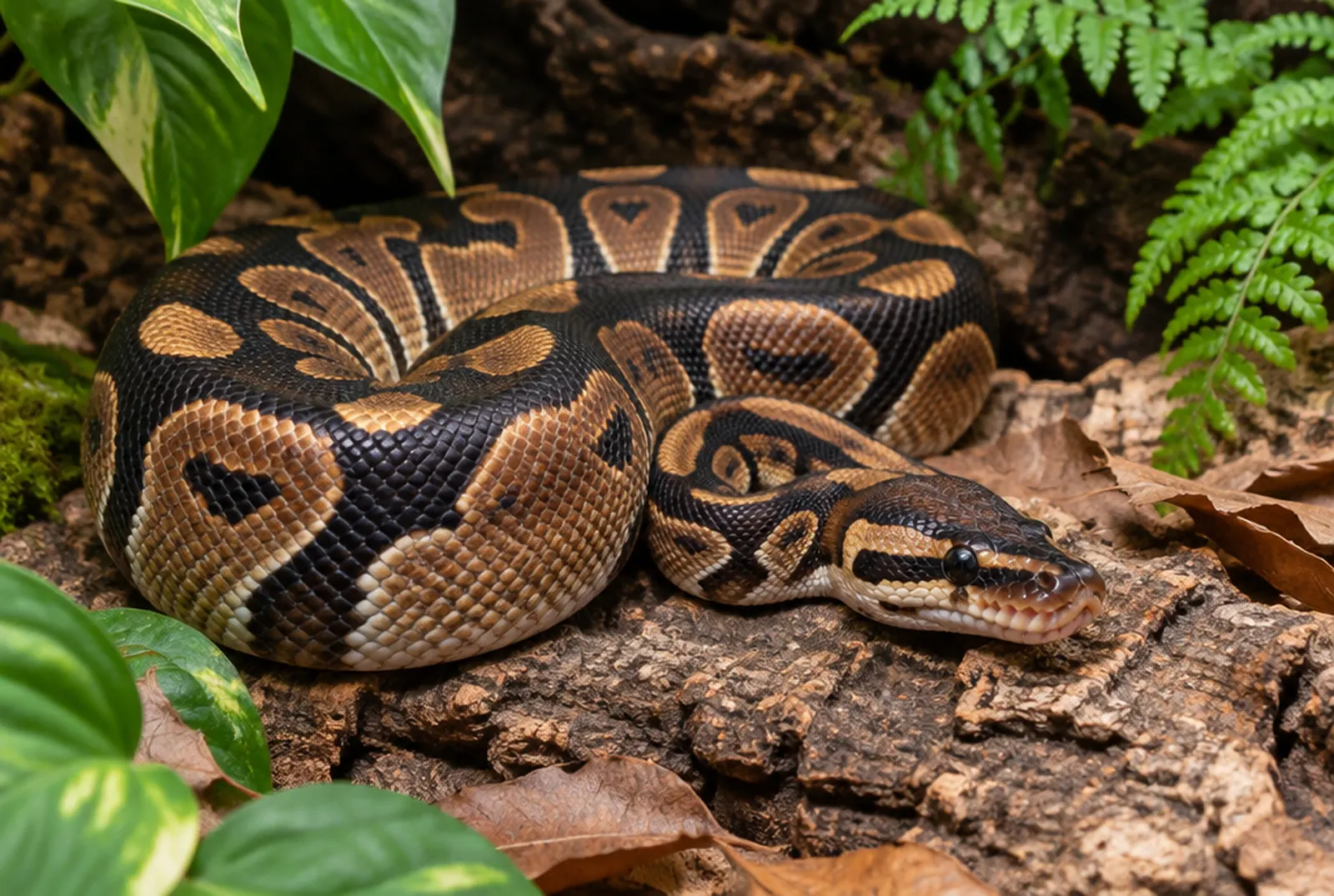
First: don't panic
Ball pythons (Python regius) evolved to survive long periods without food, and many healthy adults skip meals for weeks or months. A food strike is only a problem if the snake is losing significant weight or shows signs of illness.
Start weighing your snake on a digital kitchen scale (in grams) every 1–2 weeks. That number tells you far more than the calendar.
10 common reasons a ball python won't eat
1. Temperatures are off
The most common cause. Ball pythons need a warm side of about 88–92°F (31–33°C) at the surface and a cool side of 75–80°F (24–27°C). Check with a digital probe thermometer or infrared thermometer, not a stick-on dial. Every heat source should be on a thermostat.
2. It's new, or something changed
A new home, a rearranged enclosure, a new room or frequent handling can all cause stress. Give new snakes 1–2 weeks to settle with no handling before the first meal.
3. Not enough security
Ball pythons need snug hides on both the warm and cool sides and plenty of clutter. A bare enclosure with one hide makes many ball pythons too nervous to eat.
4. It's about to shed
Many snakes refuse food when their eyes turn blue/cloudy before a shed. Wait until after the shed, then offer food again.
5. Breeding season
Adult males (and some females) often fast during the cooler months, roughly autumn through winter, when they'd normally breed. Monitor weight; this is normal.
6. Prey is the wrong type, size or temperature
- Prey should be about as wide as the widest part of the snake's body, or slightly larger.
- Frozen-thawed prey should be warmed to around body temperature (let it sit in warm water, then dry it).
- Some ball pythons prefer rats, others mice, and switching can trigger a strike.
7. Feeding too often
Offering food too frequently can lead to refusals. Adults generally do well on a meal every 2–4 weeks, juveniles every 7–10 days (see our snake feeding chart).
8. Humidity is too low
Ball pythons need about 60–80% humidity, higher before a shed. Low humidity leads to bad sheds and stress.
9. Handling right before or after feeding
Don't handle the snake for a day or two before feeding, or for 48 hours after a meal.
10. Illness
Respiratory infections, mouth infections, parasites and other illnesses can cause appetite loss. See the warning signs below.
How to get a ball python eating again
- Fix temperatures, hides and humidity first. Most strikes end once husbandry is right.
- Feed at night, in low light, and leave the snake in its enclosure.
- Warm the prey well, and "wiggle" it with long tongs to mimic live movement.
- Try braining the prey (making a small cut on the head) to release scent.
- Try a different prey type or colour, e.g. rat instead of mouse.
- Leave the prey in the enclosure overnight next to the hide (frozen-thawed only, never live prey unattended).
- If it refuses, wait 1–2 weeks before trying again rather than offering every day.
When to see a reptile vet
- Weight loss of more than about 10% of body weight
- Wheezing, bubbles or mucus from the nose or mouth
- Mouth swelling, redness or discharge
- Lethargy, abnormal posture or "stargazing"
- Regurgitation
- A baby or juvenile that hasn't eaten for more than a few weeks
FAQ
How long can a ball python go without eating? Healthy adults can go weeks to months. Watch weight, and see a vet after about 10% loss.
Should I force-feed my ball python? No; only a vet should.
Why won't my new ball python eat? Stress. Leave it alone for 1–2 weeks before offering food.
For full setup details, see the ball python care sheet.