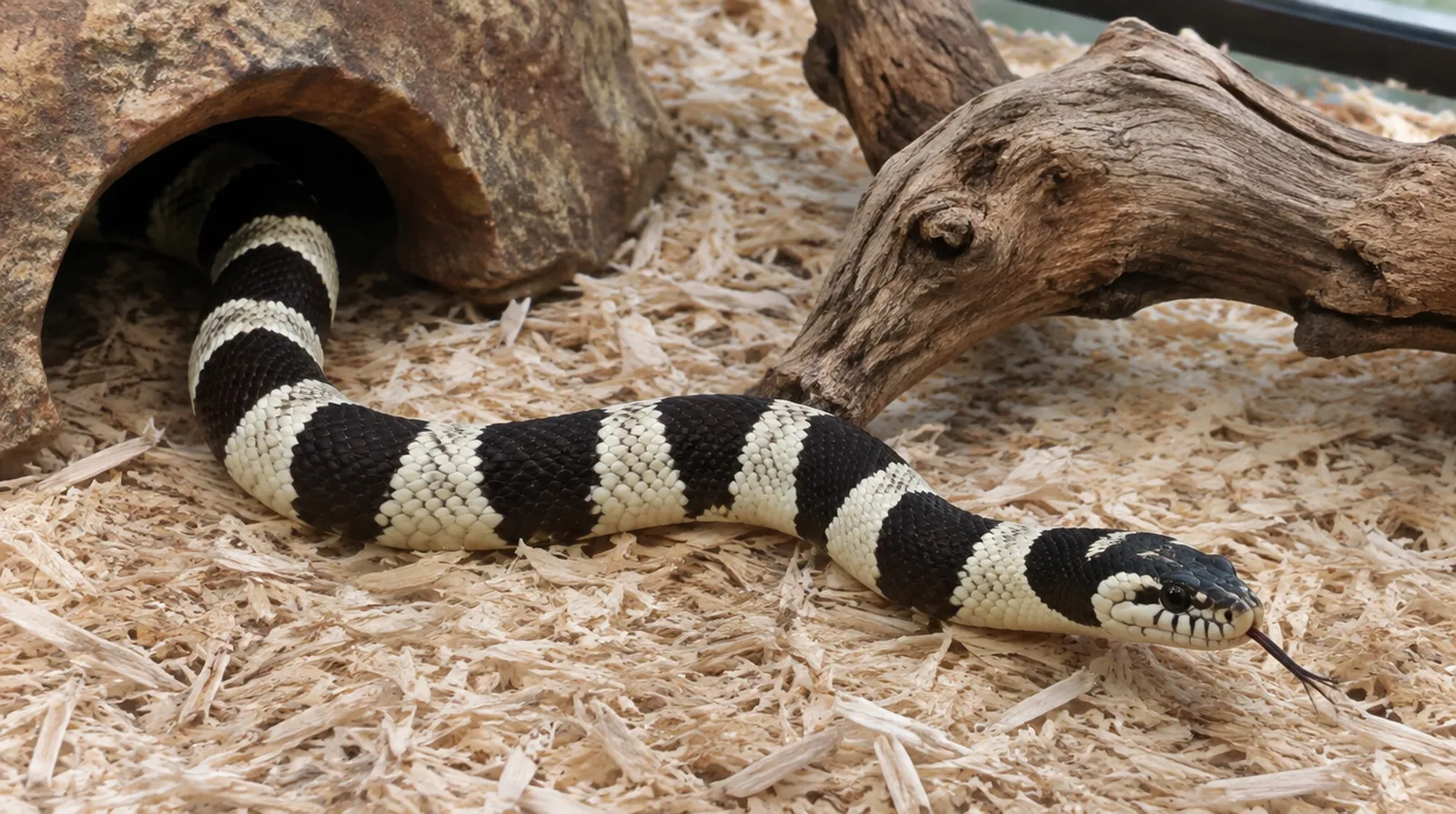
Is a California kingsnake right for you?
The California kingsnake (Lampropeltis californiae) ranges from Oregon to Baja California and east into Arizona and Utah. Captive-bred "Cali kings" come in classic black-and-white or brown-and-cream bands, stripes, aberrant patterns, albinos and more.
They're tough, active during the day and at dusk, and rarely refuse food, which makes them an excellent beginner snake. Hatchlings can be feisty, and a kingsnake's feeding response is strong, but most settle into very handleable adults.
Enclosure
| Snake | Enclosure |
|---|---|
| Hatchling | 10–20 gallon or small tub |
| Juvenile | 36×18×18 in |
| Adult (minimum) | 4×2×2 ft (120×60×60 cm) |
Kingsnakes are escape artists: use a lockable lid and check every gap. Provide hides at both ends, plenty of clutter and cover, and a water bowl large enough to soak in.
Never house kingsnakes together. They're ophiophagous (they eat snakes), including their own species.
Heating
- Warm side / basking surface: 85–90°F (29–32°C)
- Cool side: 70–78°F (21–26°C)
- Night: low 70s °F (21–23°C)
Use a guarded halogen or deep heat projector overhead, or a heat mat under the warm end, always on a thermostat.
Lighting
UVB is optional but can benefit kingsnakes, which are often active by day. A regular 12-hour light cycle is recommended.
Humidity
Keep humidity around 40–60%, with a humid hide (damp moss) during shed.
Substrate
Aspen shavings, cypress mulch or a soil mix all work. Kingsnakes enjoy burrowing, so give 2–3 inches. Avoid cedar and pine.
Feeding
| Age | Prey | Frequency |
|---|---|---|
| Hatchling | Pinky mouse | Every 5–7 days |
| Juvenile | Fuzzy to hopper mouse | Every 7–10 days |
| Adult | Adult mouse (or 2 small mice) | Every 10–14 days |
Feed frozen-thawed prey with tongs. Kingsnakes are voracious and get overweight easily, so resist feeding more often. Wash your hands before handling, as a kingsnake that smells mouse on your fingers may strike.
Handling
Hatchlings may musk, rattle their tails and nip. Short, regular, calm sessions usually tame them. Adults are often curious and active rather than defensive.
Common mistakes
- Housing two kingsnakes together.
- Loose or unlocked lids.
- Overfeeding.
- Heat without a thermostat.
Signs of a healthy kingsnake
Clear eyes outside of shed, complete sheds, steady appetite and an active, tongue-flicking snake. Mouth bubbles, wheezing, lumps or long fasts with weight loss need a reptile vet.
FAQ
What size enclosure does a California kingsnake need? 4×2×2 ft minimum for an adult.
Can kingsnakes live together? No. They eat other snakes.
What temperature? Warm side 85–90°F (29–32°C), cool side 70–78°F (21–26°C).