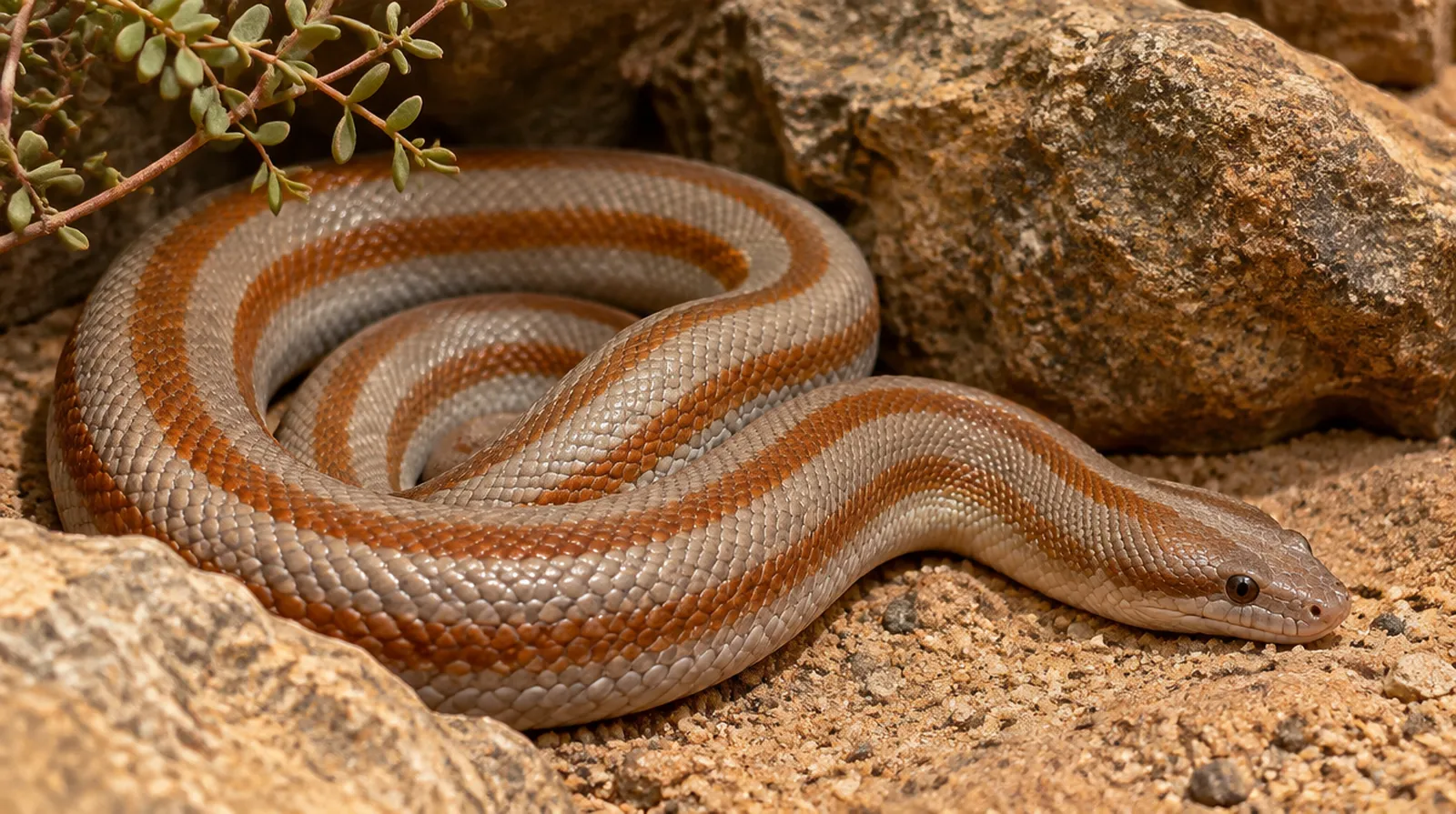
Is a rosy boa right for you?
Rosy boas (Lichanura trivirgata and L. orcutti) live in the deserts and rocky scrub of the southwestern United States and northwestern Mexico. They're one of the few boas native to the US, and they come in striped and mottled localities (Mexican, desert, coastal and others) in shades of grey, orange, rose and brown.
They're among the calmest snakes in the hobby: slow-moving, rarely defensive and small enough for a modest enclosure. Their main risks are damp conditions and overfeeding.
Wild collection is regulated in the US, and like all boas they're on CITES Appendix II (EU Annex B), so buy captive-bred.
Enclosure
| Snake | Enclosure |
|---|---|
| Hatchling | 10–20 gallon |
| Adult (minimum) | 36×18×18 in |
| Adult (better) | 48×24×24 in |
Rosy boas are good escape artists, so use a lockable lid. Add a hide on each end, stacked (secured) rocks, cork bark and a water dish.
Heating
- Warm side surface: 90–95°F (32–35°C)
- Cool side: 70–78°F (21–26°C)
- Night: can drop to the mid-60s °F (about 18°C)
Use an overhead halogen bulb or a heat mat under the warm hide, on a thermostat.
Lighting
UVB is optional; low-level UVB and a natural day length are a nice addition. Many keepers shorten the light period in winter to follow their natural cycle.
Humidity
Keep it dry: about 20–40%. Provide a water dish, but don't mist routinely. A slightly damp hide during shed is enough. Wet bedding causes scale rot and respiratory infections.
Substrate
Aspen shavings or a sand/soil mix both work. Rosy boas like to burrow a little, so 2–3 inches is good. Avoid cedar and pine.
Feeding
| Age | Prey | Frequency |
|---|---|---|
| Hatchling | Pinky mouse | Every 7 days |
| Juvenile | Fuzzy mouse | Every 7–10 days |
| Adult | Small adult mouse | Every 10–14 days |
Rosy boas have slow metabolisms and get obese easily. Feed prey no wider than the snake's body and don't increase meal size just because the snake will eat it. Winter fasting is common and normal if weight holds steady.
Handling
Gentle, slow and rarely nippy. Support the body and let it move through your hands. Wait 48 hours after feeding.
Common mistakes
- Damp enclosures.
- Overfeeding.
- Panicking over normal winter fasting.
- Unsecured lids.
Signs of a healthy rosy boa
Smooth, rounded (not lumpy) body, clean sheds, alert tongue-flicking and steady weight. Wheezing, mouth bubbles, brown or blistered belly scales, or weight loss need a reptile vet.
FAQ
What size enclosure does a rosy boa need? 36×18×18 in minimum; 48×24×24 in is better.
Do rosy boas need humidity? Low: around 20–40%.
Why has my rosy boa stopped eating? Often seasonal fasting or shed. Fine if weight is steady.