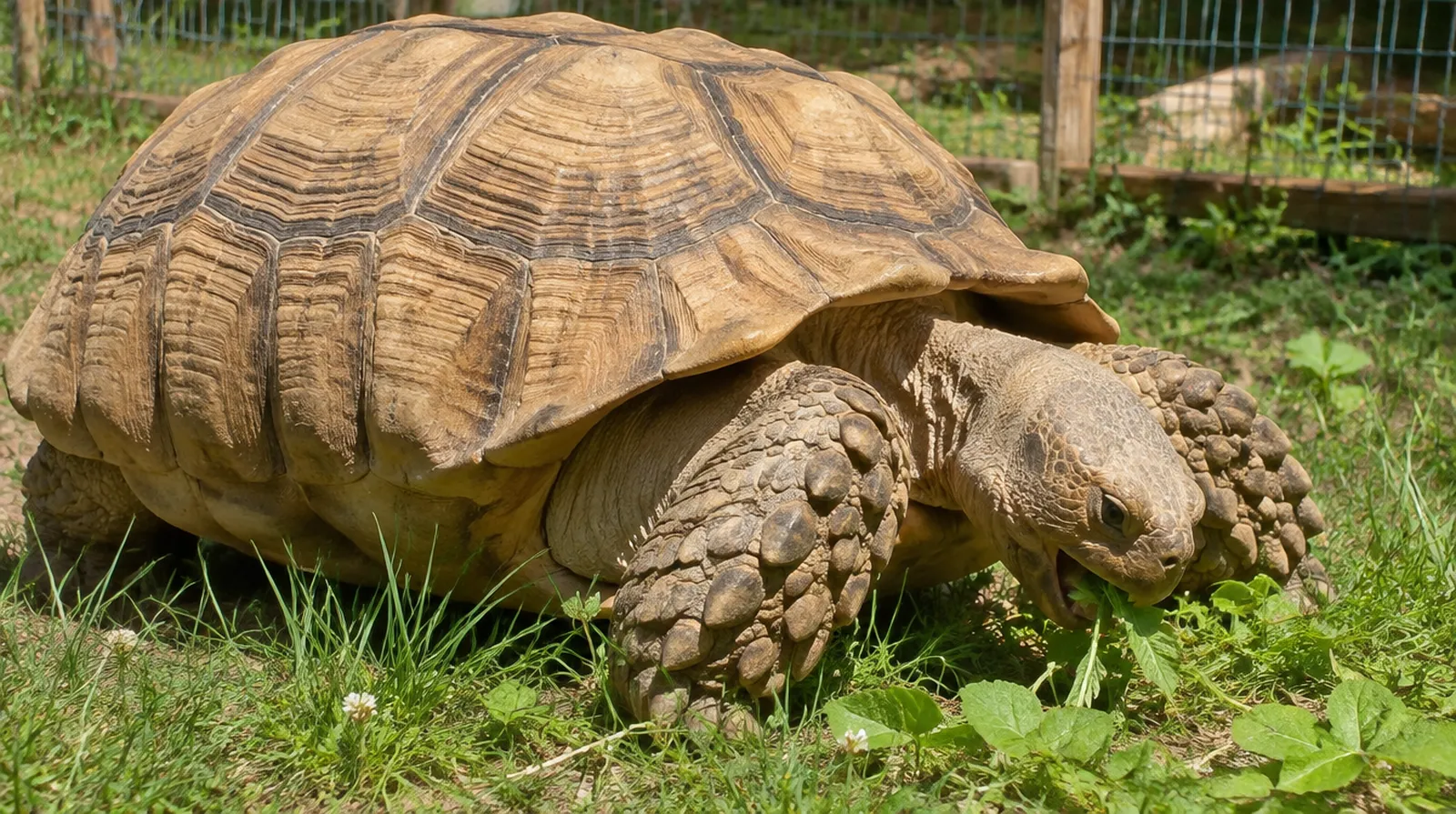
Think before you buy. Sulcatas grow fast, get huge and live 70+ years. Rescues are full of sulcatas that outgrew their homes. If you can't offer a large, secure, warm outdoor space for life (and a plan for who takes over after you), choose a smaller species such as the Russian tortoise.
Is a sulcata right for you?
The sulcata or African spurred tortoise (Centrochelys sulcata) lives in the hot, dry Sahel south of the Sahara. It digs burrows several metres long to escape the heat. In captivity sulcatas are gentle, curious and easy to feed, but their size, strength and lifespan make them one of the most demanding pets you can choose.
They're listed on CITES Appendix II and EU Annex B, so keep proof of legal, captive-bred origin.
Housing by age
| Age | Housing |
|---|---|
| Hatchling | 4×2 ft open tortoise table indoors, minimum |
| Juvenile (growing fast) | 8×4 ft indoors plus outdoor time in warm weather |
| Adult | Outdoor pen of at least 16×16 ft (5×5 m), larger is better, plus a heated, insulated shed |
Outdoor pens: sulcatas push through weak fencing and dig under it. Use solid walls (block, timber or metal) at least 24 in high above ground with footings sunk deep into the ground. They'll also dig burrows that can undermine walls and patios, so plan where burrowing is allowed.
The shed: in most climates adults need an insulated, heated night box or shed (thermostat-controlled radiant or ceramic heat) for nights below about 60°F (16°C) and for wet weather. Sulcatas are not built for cold and damp.
Heating
- Basking surface: 100–105°F (38–41°C)
- Warm side: 85–90°F (29–32°C)
- Cool side: 75–80°F (24–27°C)
- Night: keep above about 60°F (16°C); warmer for hatchlings
Indoors, use halogen flood bulbs on a thermostat. Outdoors, the sun does the work on warm days.
Lighting and UVB
Natural, unfiltered sunlight is ideal. Indoors, use a T5 HO 10–12% UVB tube over the basking area with 12–14 hours of light, and replace it every 12 months.
Humidity and pyramiding
Pyramiding (raised, lumpy shell scutes) is linked to low humidity and dehydration in young tortoises, along with overfeeding protein. Give hatchlings and juveniles a humid hide or moist burrow area (around 70% or higher inside) and soak them in shallow lukewarm water a few times a week. Adults do well at 40–60% with access to water.
Diet
Sulcatas are grazers, built for fibre and low protein.
- Staple (most of the diet): grasses (lawn grass that hasn't been sprayed), Bermuda/orchard/timothy hay.
- Daily extras: weeds and broadleaf plants such as dandelion, plantain, clover, mallow and hibiscus leaves and flowers; opuntia (prickly pear) pads.
- Avoid: fruit, beans, peas, meat, dog or cat food, and lots of commercial pellets.
Dust food with plain calcium several times a week for growing tortoises. Fresh water should always be available in a shallow dish.
Handling
Sulcatas can be very friendly and follow people around, but adults are heavy and strong. Don't lift adults without help, and keep children supervised, as they can be knocked over.
Common mistakes
- Buying a hatchling without a plan for the adult.
- Keeping adults indoors full-time.
- Cold, damp nights without a heated shelter.
- High-protein or fruit-heavy diets, causing pyramiding and kidney strain.
- Weak fencing.
Signs of a healthy sulcata
Active, grazing and basking, smooth shell growth, clear eyes and nostrils. A runny nose, swollen eyes, a soft shell, straining or loss of appetite in warm weather need a reptile vet.
FAQ
How big do sulcatas get? 24–30 in shell length and 70–100+ lb.
Can a sulcata live indoors? Only as a hatchling or young juvenile. Adults need a big outdoor pen and a heated shed.
What do they eat? Mostly grasses and hay, plus weeds. No fruit or high-protein food.