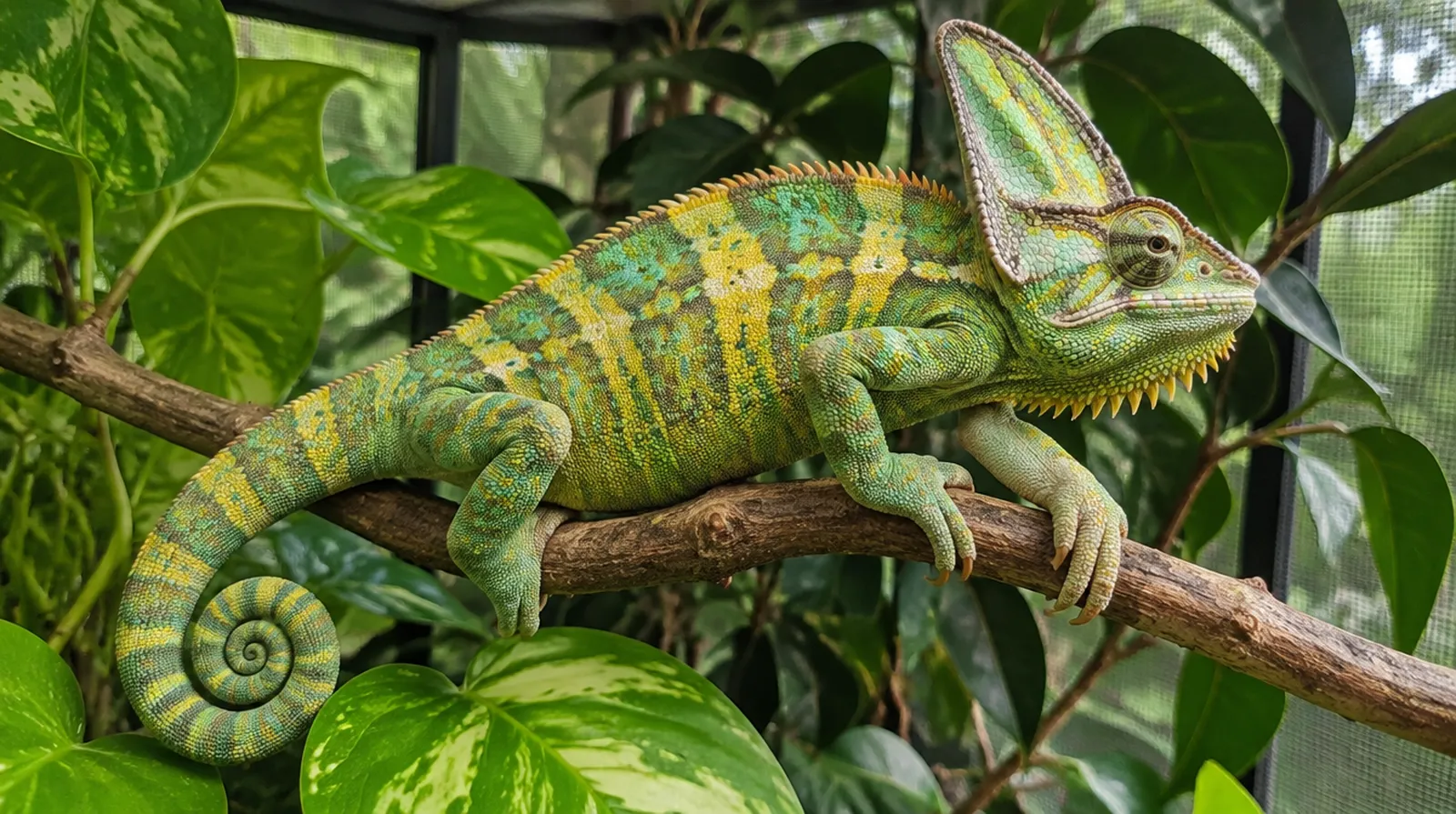
Is a veiled chameleon right for you?
The veiled chameleon (Chamaeleo calyptratus) comes from the mountains and valleys of Yemen and southwestern Saudi Arabia. It's the most widely bred chameleon in captivity and tougher than most, which makes it the usual "first chameleon".
Even so, chameleons are display animals. Handling stresses them, they won't drink from a bowl, and they need a planted, ventilated enclosure plus daily misting and insect feeding. If you're happy to watch rather than hold, they're incredibly rewarding.
Enclosure
| Chameleon | Enclosure |
|---|---|
| Juvenile (under ~6 months) | 16×16×30 in, or a larger enclosure with dense cover |
| Adult female | 18×18×36 in minimum; 24×24×48 in better |
| Adult male | 24×24×48 in (2×2×4 ft) minimum |
Use screen or hybrid (solid sides, screen top and front) enclosures for airflow. Fill the upper two-thirds with branches of different thicknesses and live plants such as pothos, schefflera, ficus and hibiscus. Keep only one chameleon per enclosure, and position enclosures so chameleons can't see each other.
Heating
- Basking spot: 85–95°F (29–35°C) for adults (males toward the upper end); juveniles lower, around 80–85°F (27–29°C)
- Ambient: 72–80°F (22–27°C)
- Night: 60–70°F (16–21°C); no night heat needed in most homes
Use a low-wattage halogen bulb on top of the screen, over a basking branch, on a thermostat. Keep the bulb outside the enclosure so the chameleon can't touch it.
Lighting and UVB
UVB is essential: chameleons are prone to metabolic bone disease without it. Use a T5 HO 5–6% UVB tube across the top of the enclosure, with the basking branch at the right distance (check the bulb maker's UVI guidance). Run lights about 12 hours a day and replace the UVB tube every 12 months.
Water and humidity
Chameleons drink moving water droplets.
- Mist the plants 2–4 times a day, including a longer session in the morning.
- A dripper or automatic mister makes this much easier.
- Day humidity around 40–60%, spiking after misting. Let the enclosure dry out between sessions; constantly wet enclosures grow mould and cause respiratory infections.
Diet and feeding
Veiled chameleons are insectivores (adults sometimes nibble plants). Feed a variety of gut-loaded insects: crickets, dubia roaches, black soldier fly larvae, silkworms and the occasional hornworm.
| Age | Amount | Frequency |
|---|---|---|
| Juvenile | As many as eaten in a few minutes | Daily |
| Adult male | About 3–5 insects | Every other day |
| Adult female | Fewer, smaller meals to slow egg production | Every 2–3 days |
Supplements: calcium without D3 at most feedings, calcium with D3 plus a multivitamin about twice a month.
Females and egg-laying
Female veiled chameleons produce clutches of eggs even if they've never met a male. From about 4–6 months old, give her a laying bin: a container at least 12 in deep filled with moist, packable sand or soil. Signs she's ready to lay include restless digging, pacing the floor and refusing food. A female that can't lay can become egg-bound; see a vet if she's straining or lethargic.
Handling
Keep it minimal. Let the chameleon walk onto your hand rather than grabbing it. Dark colours, hissing and gaping mean stress.
Common mistakes
- A water bowl as the only water source.
- No UVB or an old bulb.
- Housing two chameleons together or within sight of each other.
- No laying bin for females.
- Overfeeding females, which drives constant egg production.
Signs of a healthy veiled chameleon
Bright, open eyes that move independently, a firm grip, steady appetite, normal colours and white urates in droppings. Sunken eyes, a weak grip, a soft or bent jaw or limbs, or staying dark all day need a reptile vet.
FAQ
What size enclosure does a veiled chameleon need? 24×24×48 in minimum for an adult.
How do veiled chameleons drink? From droplets on leaves: mist 2–4 times a day or use a dripper.
Why does my female need a laying bin? Females lay eggs without a male and can become egg-bound without a place to dig.