Why feed frozen-thawed prey?
Feeding frozen-thawed rodents is one of the safest, most convenient and most widely used ways to feed pet snakes. A live mouse or rat can bite and scratch, and if it's left with a snake that isn't hungry, it can cause serious and sometimes fatal injuries. Frozen rodents are also easy to store, come in a wide range of sizes, and freezing helps reduce some parasites. Most captive-bred snakes eat frozen-thawed prey without any fuss.
The key is to thaw and warm the prey properly and handle it hygienically, so your snake gets a safe, nutritious meal.
Choosing the right size
As a general guide, the prey should be about the same width as your snake's body at its widest point, or very slightly wider. A meal that leaves a small lump for a day or so is about right; one that leaves a large bulge is too big. That said, feeding needs vary between species, ages and individual snakes, so take your snake's species, body condition and feeding history into account rather than just picking prey that looks big enough. Our snake feeding chart has more detail, and if you're unsure, ask an experienced keeper or your vet.
Thawing safely
Take out only the number of rodents you plan to feed that day. Never thaw and refreeze rodents, as this lowers their quality and increases the risk of bacteria growing. Keep the prey in a sealed bag or covered container while it thaws, away from any food for people.
The safest and easiest method is to thaw prey in the fridge. A mouse usually takes 6–12 hours and a rat 12–24 hours, so many keepers simply move tomorrow's meal from the freezer to the fridge the night before.
If you need it faster, place the rodent in a sealed plastic bag in a bowl of cool water. A mouse usually thaws in 30–60 minutes and a rat in 1–2 hours. Change the water if it gets very cold.
Small prey can also be thawed at room temperature in a covered container, which takes 2–4 hours for a mouse. Don't leave it out much longer than that.
Never use a microwave, oven or boiling water to thaw prey. These heat it unevenly, can cook parts of it or make it burst, and create hot spots that can burn your snake.
Warming the prey
Snakes find their food by smell and heat, so a meal that's warm on the outside is much more likely to trigger a strike. Once the rodent is fully thawed, put the sealed bag in a bowl of warm (not boiling) water for 10–20 minutes until it's warm all the way through.
Before feeding, gently press on the belly. It should feel soft and warm, with no stiffness or cold spots. A cold centre is one of the most common causes of regurgitation. For snakes that are a little reluctant, warming the head with a hairdryer just before feeding can make a real difference.
Offering the meal
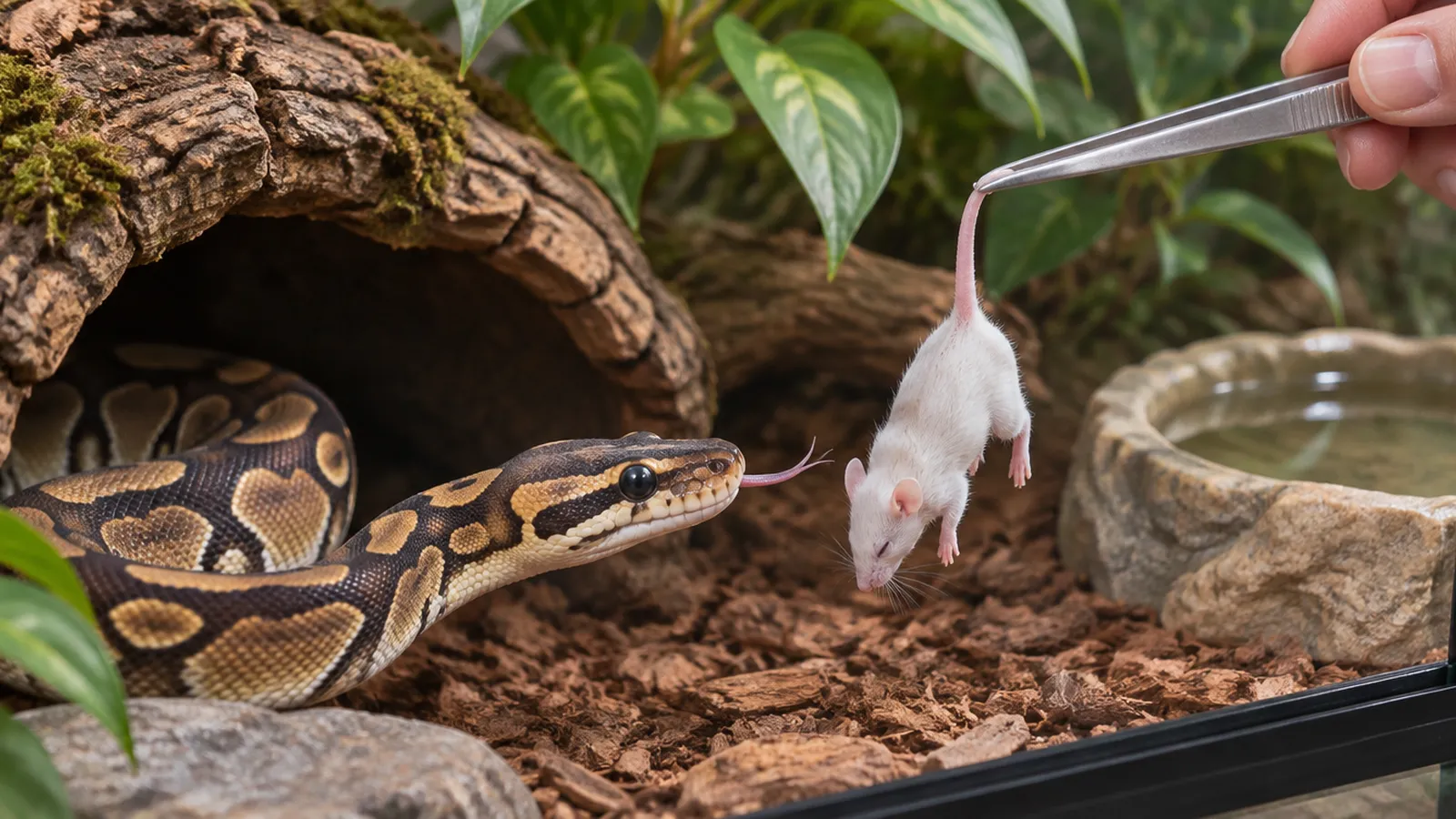
Always use long feeding tongs rather than your fingers. Hold the prey by the tail or the back and move it gently to mimic a living animal, offering it close to the snake's head. Some snakes prefer the prey left near the entrance of their hide overnight. If you thawed the prey in water, pat it dry first so it doesn't pick up substrate.
Cleaning up
Remove any uneaten prey after a few hours and throw it away. Never refreeze it. Wash your tongs, bowls and hands with hot soapy water afterwards, and keep your feeding equipment separate from your kitchen utensils.
If your snake won't eat
Check that the prey is warm enough, try feeding in the evening, and give the snake some privacy by covering part of the enclosure. Make sure your temperatures are correct. Remember that some snakes naturally fast while they're shedding or during winter. For more help, see ball python not eating.
FAQ
Can I microwave a frozen mouse? No: it heats unevenly and can burn your snake.
How long does thawing take? A few hours in the fridge for mice; longer for rats.
Can I refreeze a thawed mouse? No. Throw it away.