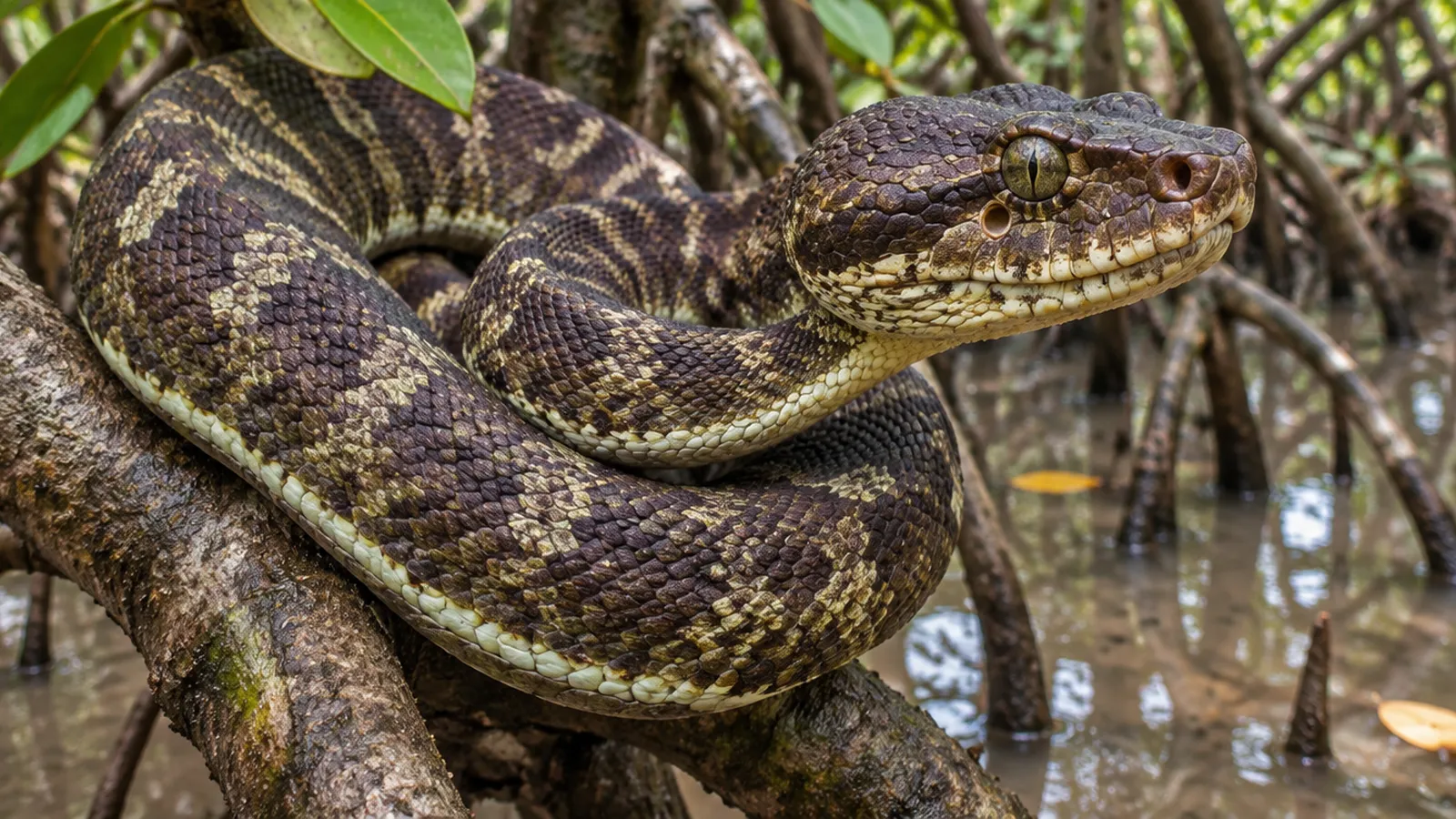
About the mangrove pit viper
The mangrove pit viper (Trimeresurus purpureomaculatus, sometimes listed as Cryptelytrops purpureomaculatus) lives in the mangrove swamps, coastal forests and river mouths of Southeast Asia, including Myanmar, Thailand, Malaysia, Singapore and Sumatra. It's a large, heavy-bodied tree viper with a big triangular head. Colours range from dark purplish brown and olive to mottled grey, with a pale stripe along the lower sides.
Females are much larger and heavier than males, reaching up to about 130 cm, while males stay around 90 cm and are fairly slender. Many keepers have avoided the species because of its size, defensive nature and potent venom, but for experienced venomous keepers it's an impressive and relatively hardy arboreal viper that tolerates small changes in conditions better than many of its relatives.
Venom and safety
Mangrove pit vipers give little warning and strike readily at any threat. Their venom is haemotoxic: bites cause intense pain, swelling and tissue death (necrosis), and in some cases severe bleeding throughout the body. Deaths are rare, but bites can cause serious medical problems and need urgent hospital treatment.
Use hooks, tongs and lockable transfer boxes; never free-handle. Keep a written bite protocol with the species name and appropriate antivenom information ready for emergency services.
The law
Most countries and states require a dangerous wild animal licence and secure housing to keep venomous snakes, and some ban them outright. Check local laws before acquiring one.
Housing
An arboreal display enclosure is ideal for this species. Being able to see the snake clearly before you open the door makes it safer for the keeper and lets you enjoy the snake without disturbing it. A vertical enclosure of around 40×40×90 cm (16×16×36 in) suits an adult, with plenty of sturdy branches at different heights and some foliage for cover. Juveniles can be kept in small, ventilated plastic containers with a perch.
The enclosure must be escape-proof and lockable. Many keepers use enclosures with a lockable hide box or trap box so the snake can be shut away during cleaning.
Substrate
Coco husk, cypress mulch or a soil mix holds humidity well.
Heating
Provide a warm area of around 28–30°C (82–86°F) near the upper perches, with lower areas around 24–26°C (75–79°F). Heat from above using a radiant panel or guarded lamp on a thermostat.
Lighting and humidity
A 12-hour light cycle with low-output UVB is beneficial. Keep humidity fairly high at around 70–80%, misting regularly; many drink droplets from leaves and their own coils. Ensure good ventilation.
Feeding
Feed pre-killed rodents with long tongs at perch height. Juveniles can be fed every 7–10 days and adults every 14–21 days. Some juveniles start more easily on small frogs or lizards before switching to rodents. Avoid overfeeding.
Breeding
Mangrove pit vipers give birth to live young. Breeding should only be attempted by highly experienced, licensed keepers, as neonates are fully venomous.
FAQ
How dangerous is the bite? Serious: pain, swelling, necrosis and possible bleeding problems.
Are they aggressive? Defensive and quick to strike.
What do they eat? Pre-killed rodents in captivity.