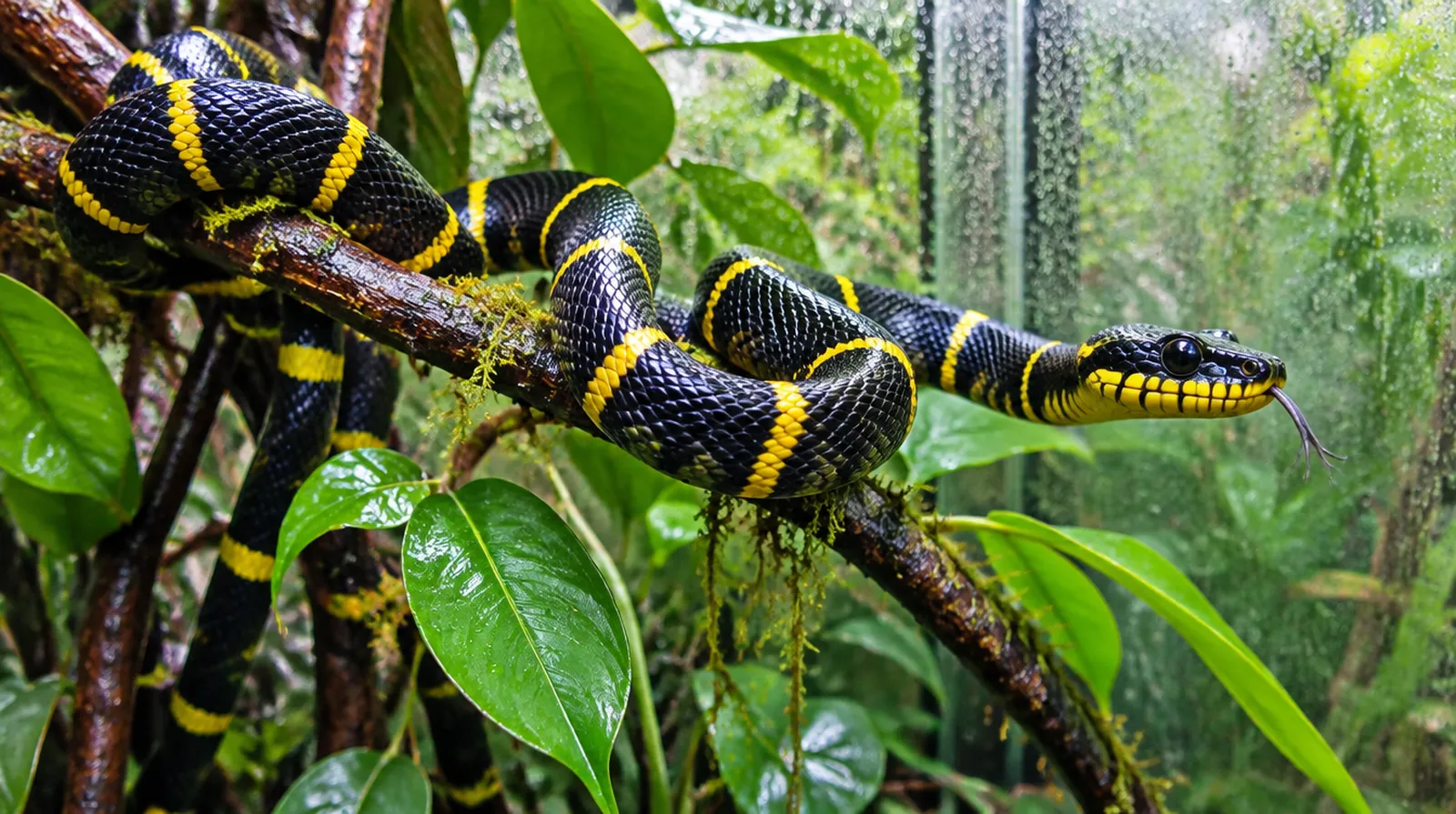
Venomous and regulated in some places. Mangrove snakes are rear-fanged and mildly venomous. Some countries, states and local councils require a licence or restrict keeping venomous or rear-fanged species. Check the rules where you live before buying, and only keep one if you're experienced with defensive snakes.
Is a mangrove snake right for you?
The mangrove snake or gold-ringed cat snake (Boiga dendrophila) lives in lowland rainforest and mangrove swamps across Southeast Asia: southern Thailand, Malaysia, Indonesia and the Philippines. Its glossy black body with narrow yellow bands is unmistakable.
It's nocturnal, arboreal and often defensive, with open-mouth threat displays and a willingness to bite. Venom is delivered through grooved rear fangs, usually when the snake chews, and reported effects include pain, swelling and discoloration. Many mangrove snakes in the trade are wild-caught imports that arrive stressed, dehydrated and carrying parasites. Captive-bred animals are available and are a much better choice.
Safety
- Use a snake hook and tongs for maintenance and moving the snake; don't free-handle.
- A lock-box (a hide with a door you can close from outside) makes cleaning safer.
- Use a lockable enclosure and keep it away from children and visitors.
- Have a bite plan: wash the wound, remove rings or watches near the bite, and seek medical advice, telling clinicians the species.
Enclosure
| Snake | Enclosure |
|---|---|
| Juvenile | 24×18×24 in arboreal |
| Adult (minimum) | 4×2×4 ft (120×60×120 cm) |
| Adult (better) | Larger and taller |
Use a solid-sided (PVC, wood or glass) arboreal enclosure with ventilation; screen enclosures can't hold enough humidity. Fill it with sturdy horizontal and diagonal branches, cover from plants, elevated hides and a large water bowl.
Heating
- Basking spot (upper level): 85–88°F (29–31°C)
- Ambient: 78–82°F (26–28°C)
- Cool area: about 75°F (24°C)
Use a guarded overhead heat source (deep heat projector or halogen in a cage) on a thermostat. Guard every bulb: arboreal snakes climb onto fixtures.
Lighting
Low-level UVB and a day/night cycle are beneficial. Provide plenty of shade.
Humidity
Keep humidity 70–80% with good airflow. Mist in the evening, use moisture-holding substrate and live plants, and keep a large water bowl. Dehydration is a common problem, especially in new imports.
Substrate
A moisture-holding soil/coco mix, cypress mulch or a bioactive substrate.
Feeding
In the wild, mangrove snakes eat birds, lizards, frogs, fish and small mammals. Captive-bred snakes usually take frozen-thawed mice and small rats. Some, especially wild-caught snakes, insist on chicks at first and may need prey scented with bird or lizard before switching to rodents.
| Snake | Prey | Frequency |
|---|---|---|
| Juvenile | Fuzzy / hopper mice | Every 5–7 days |
| Adult | Adult mice or small rats | Every 7–14 days |
Feed at night with long tongs. Get a fecal test and vet check for any imported snake, as parasites are common.
Common mistakes
- Free-handling a rear-fanged snake.
- Screen enclosures and low humidity.
- Buying wild-caught imports without a vet check.
- Unguarded heat sources.
- Not checking local licence rules.
Signs of a healthy mangrove snake
Glossy scales, alert tongue-flicking at night, clean sheds and steady feeding. Wrinkled skin (dehydration), mouth discharge, wheezing, stuck shed or weight loss need a vet experienced with venomous species.
FAQ
Are mangrove snakes venomous? Yes, rear-fanged and mildly venomous. Seek medical advice after any bite.
What size enclosure? At least 4×2×4 ft, solid-sided and tall.
What humidity? 70–80% with good ventilation.