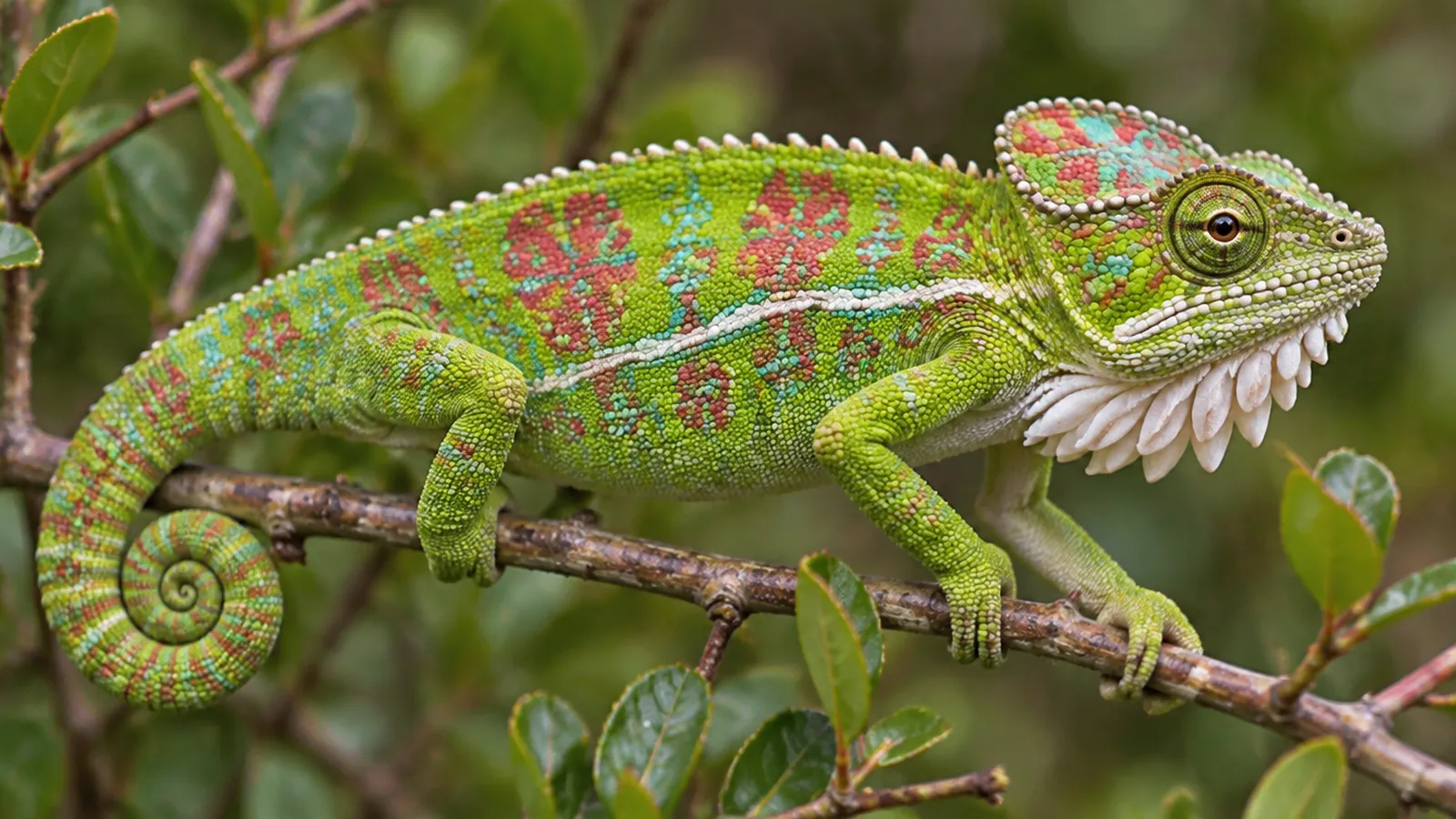
About the Midlands dwarf chameleon
The KwaZulu-Natal Midlands dwarf chameleon (Bradypodion thamnobates) is found only in a small area of the KwaZulu-Natal Midlands in South Africa, around towns such as Howick, Nottingham Road, Mooi River and Tweedie. Males are spectacular: a tall, helmet-like casque on the head, a serrated crest along the throat and back, and bright green bodies splashed with turquoise, blue, white and pinkish red. Females are smaller and usually plainer green.
The Midlands has a highland climate. Summers are warm and wet, with most of the region's annual rainfall falling between October and April, highs above 30°C (86°F) and humidity of 80–100%. Winters are cold and dry, with frost and occasionally snow; temperatures have been recorded as low as −10°C (14°F). Midlands dwarf chameleons are adapted to these cold nights and don't need to be kept hot.
The species is endangered. Its tiny range has been badly affected by habitat loss, development and commercial forestry, and it also faces threats from cats and dogs, cars, collection for traditional medicine and local superstitions, and severe weather such as hailstorms, one of which almost wiped out the wild population at Tweedie in 2010. Long-term keepers in South Africa have played an important role in learning about the species and breeding it in captivity.
Legal status
This is not a species you can simply buy. It is protected in South Africa, and collecting it from the wild is illegal. Keeping, breeding or transporting them requires permits from Ezemvelo KZN Wildlife or the relevant provincial authority, and export is very tightly controlled. Outside South Africa they are almost never legally available. If you're interested in South African dwarf chameleons, speak to your provincial conservation authority before going any further.
Housing
Dwarf chameleons need excellent airflow, so a screen (mesh) or mostly mesh enclosure is best. A single adult can be kept in an enclosure of around 45×45×90 cm (18×18×36 in). Fill it with plenty of thin branches and live plants such as ficus, pothos and hibiscus, so the chameleon has cover and lots of perches at different heights. House adults individually; males are territorial and will fight.
Substrate
A bare floor or a thin layer of soil and leaf litter keeps cleaning easy. Avoid loose substrates that could be swallowed when the chameleon hunts.
Heating
During the day, keep temperatures around 20–26°C (68–79°F), with a gentle basking spot of up to about 28°C (82°F) at the top of the enclosure. At night, temperatures can drop to around 10–16°C (50–61°F), mirroring their natural highland nights. A low-wattage basking bulb on a thermostat or dimmer is usually enough. Overheating is far more dangerous than cool temperatures for this species.
Lighting
Midlands dwarf chameleons are active by day and need UVB. Use a good-quality UVB tube across the top of the enclosure for around 12 hours a day. Many South African keepers also give their chameleons access to natural, unfiltered sunlight in a secure outdoor mesh enclosure on mild days, which they benefit from greatly.
Humidity and water
Chameleons don't usually drink from bowls. Instead, they lick droplets from leaves. Mist the enclosure thoroughly at least twice a day, or use a drip system, and keep humidity around 50–80%. Allow the enclosure to dry out between mistings; good ventilation is essential to prevent respiratory infections.
Feeding
Feed small, gut-loaded insects such as small crickets, fruit flies, houseflies, small roaches and silkworms. Juveniles need feeding daily with very small insects; adults every day or two. Dust insects with calcium most feeds and a multivitamin weekly. Variety is important for good health.
Handling
Chameleons are display animals and are stressed by handling. Keep handling to the minimum needed for health checks or cleaning.
Sexing
Males have much taller casques, brighter colours and a swollen tail base containing the hemipenes. Females are smaller with lower casques and plainer green colouring.
Breeding
Unlike egg-laying chameleons such as the veiled chameleon, whose eggs can take seven months to hatch, Midlands dwarf chameleons give birth to live young. Females usually produce 8–15 tiny babies, which must be separated from the adults and raised on very small insects such as fruit flies. Breeding should only be done with the correct permits and, ideally, as part of a conservation effort.
Common health problems
Overheating, dehydration, a lack of UVB and stress from handling or too little cover are the most common problems. Sunken eyes suggest dehydration; weak grip or soft bones suggest metabolic bone disease. A healthy dwarf chameleon has bright colours, full eyes, a strong grip, and hunts actively.
FAQ
Is it legal to keep one? Only with permits in South Africa; wild collection is illegal.
Do they lay eggs? No, they give birth to live young.
Do they need cold winters? They tolerate cool nights well; don't keep them hot all year.