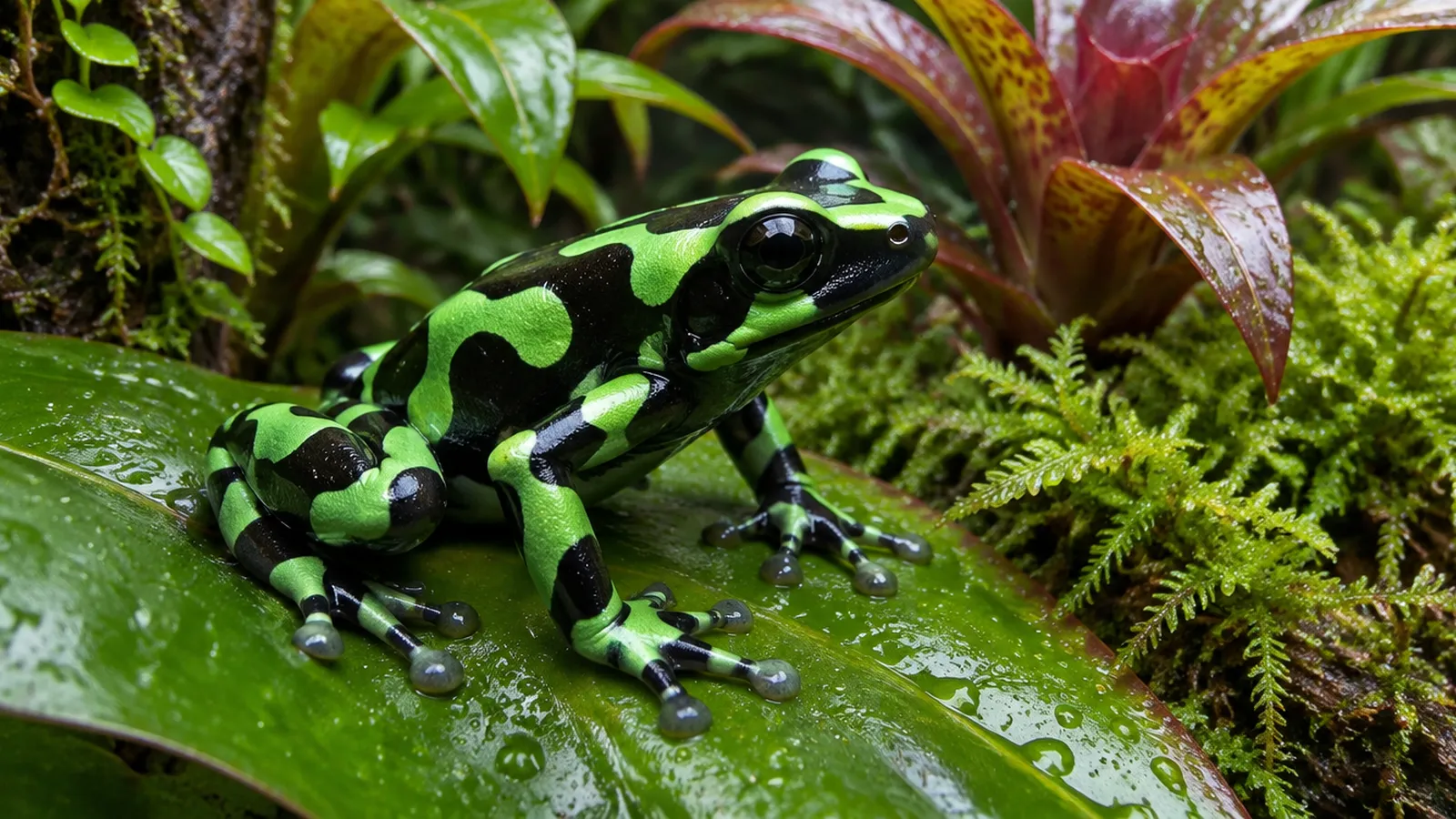
About poison dart frogs
Poison dart frogs (family Dendrobatidae, often called PDFs) live in the rainforests of Central and South America. They're tiny, usually 2–5 cm (0.8–2 in), and famous for their brilliant colours, which warn predators that they're toxic. Popular species include the green and black dart frog (Dendrobates auratus), the yellow-banded (D. leucomelas), the dyeing dart frog (D. tinctorius) and the strawberry dart frog (Oophaga pumilio).
In the wild, some species are among the most toxic animals on Earth. The golden poison frog (Phyllobates terribilis) carries batrachotoxin, one of the most powerful natural toxins known. But dart frogs don't make these toxins themselves: they get them from the ants, mites and other small invertebrates they eat in the wild. Captive-bred frogs fed on fruit flies and springtails are not dangerously toxic. That said, their skin is very absorbent, which means they can absorb harmful chemicals too, so keeping their environment clean and chemical-free is crucial.
Dart frogs are active during the day, making them a joy to watch in a planted vivarium. Many keepers find that once they're settled and comfortable, males start calling and the frogs begin to breed.
The golden rules
Experienced dart frog keepers often sum up their care in a few simple rules: keep temperatures as stable as possible, keep humidity high at all times, keep anything containing harmful chemicals well away from the frogs, and keep them calm and unstressed.
Housing
A pair of small to medium dart frogs can be kept in a vivarium of around 45×45×45 cm (18×18×18 in). Larger species or groups need more room, around 60×45×45 cm (24×18×18 in) or bigger. Glass vivariums with a front opening and a mostly glass top work best, as they hold humidity well while allowing a small amount of ventilation.
Dart frogs do best in a bioactive vivarium: a living setup with a drainage layer, a soil substrate, leaf litter, live plants and a clean-up crew of springtails and isopods. Plants such as bromeliads, pothos, ferns and mosses provide cover, humidity and places to breed. Add cork bark and leaf litter for hiding spots.
Substrate
Use a drainage layer of clay balls or gravel at the bottom, a mesh barrier, then a tropical bioactive soil mix topped with leaf litter. The clean-up crew breaks down waste and mould, and springtails double as a food source.
Temperature
Dart frogs prefer stable, moderate temperatures of around 22–26°C (72–79°F) during the day, with a slight drop at night. Never let the vivarium go above about 28°C (82°F), as heat stress can kill them quickly. In most homes, the lights alone provide enough warmth. Avoid heat mats and basking bulbs.
Lighting
Use an LED plant light for 12 hours a day to keep live plants healthy. Low-output UVB is increasingly recommended and is safe as long as there is plenty of shade.
Humidity
Humidity needs to stay high, around 80–100%. Mist the vivarium once or twice a day with dechlorinated or reverse-osmosis water, or use an automatic misting system. Never use tap water with chlorine, and never use cleaning products or sprays near the vivarium. A shallow water dish is useful but not essential.
Feeding
Dart frogs eat small, live insects. The staple diet is flightless fruit flies (Drosophila melanogaster for small species, D. hydei for larger ones), with springtails, isopods and pinhead crickets for variety. Feed adults every day or two, and froglets daily.
Dust insects with a calcium and vitamin supplement made for amphibians at most feeds. Many keepers culture their own fruit flies at home, which is much cheaper and more reliable than buying them.
Handling
Avoid handling dart frogs. Their skin is delicate and absorbs whatever is on your hands. If you must move one, use a small cup to guide it, or wash your hands thoroughly with dechlorinated water first.
Sexing
Males are usually smaller and slimmer, with larger toe pads (especially in Dendrobates) and they call. Females are larger and rounder. Watching for calling males is often the easiest way to tell.
Breeding
Dart frogs breed readily in a well-established vivarium. Females lay small clutches of eggs in sheltered, damp spots such as under coconut huts or on leaves, and the male guards and keeps them moist. Tadpoles are carried on the parent's back to small pools of water, often in bromeliad leaves. Many keepers remove eggs to raise the tadpoles separately in small cups of water.
Common health problems
Most problems come from overheating, low humidity, chemical contamination, or poor nutrition from undusted insects. Weight loss can point to parasites, and spindly legs in froglets usually indicate a vitamin or calcium deficiency. A healthy dart frog has bright colours, is plump but not bloated, active during the day and hunts eagerly.
FAQ
Are pet dart frogs poisonous? Captive-bred frogs are not dangerously toxic.
What do they eat? Fruit flies, springtails and other tiny insects.
Good for beginners? Hardier species are, if you can keep humidity high and culture fruit flies.