What constipation looks like
Constipation happens when waste moves too slowly through the gut and becomes hard and dry, making it difficult to pass. In reptiles it's surprisingly common, and the signs can be easy to miss if you don't know your animal's normal routine.
The first clue is usually that your reptile hasn't passed waste for much longer than usual after a meal. In snakes, you may notice a swollen or firm area in the lower third of the body, near the vent. Lizards may strain, lift their tail or press their vent against the ground without passing anything. When waste does finally come out, it's often dry, hard or unusually large. As things get worse, the animal may lose its appetite, become lethargic or, in snakes, regurgitate its next meal.
How often a reptile goes varies a lot between species and ages. A young bearded dragon may go every day, while a large python can take several weeks to pass a big meal. That's why it's so useful to learn your own animal's normal pattern, so you notice when something changes.
Common causes
The most common cause of constipation in reptiles is dehydration. Water is absorbed by the colon, and when a reptile is short of water, its body pulls more moisture out of the waste, leaving it dry and hard. Snakes get much of their water from their food in the wild. Frozen-thawed prey sometimes contains a little less water than live prey, so faeces can end up drier than normal.
Temperature also plays a big part. If an enclosure is cooler than the species needs, the reptile conserves heat deep in its body and its digestion slows right down. Low humidity has a similar effect, adding to dehydration.
Some reptiles swallow substrate along with their food. Sand, gravel or bark can build up in the gut and cause an impaction, which is a more serious blockage.
Lack of activity is another factor. Snakes that don't move around much, such as green tree pythons, emerald tree boas and some vipers, are especially prone, particularly when combined with incorrect temperatures and overfeeding. Large meals in general produce more waste than the gut can easily move.
Finally, constipation can be a sign of something more serious, such as parasites, retained eggs, a mass in the gut or kidney problems.
What you can do at home
Start by checking your temperatures with a digital thermometer and making sure the warm spot is correct for the species.
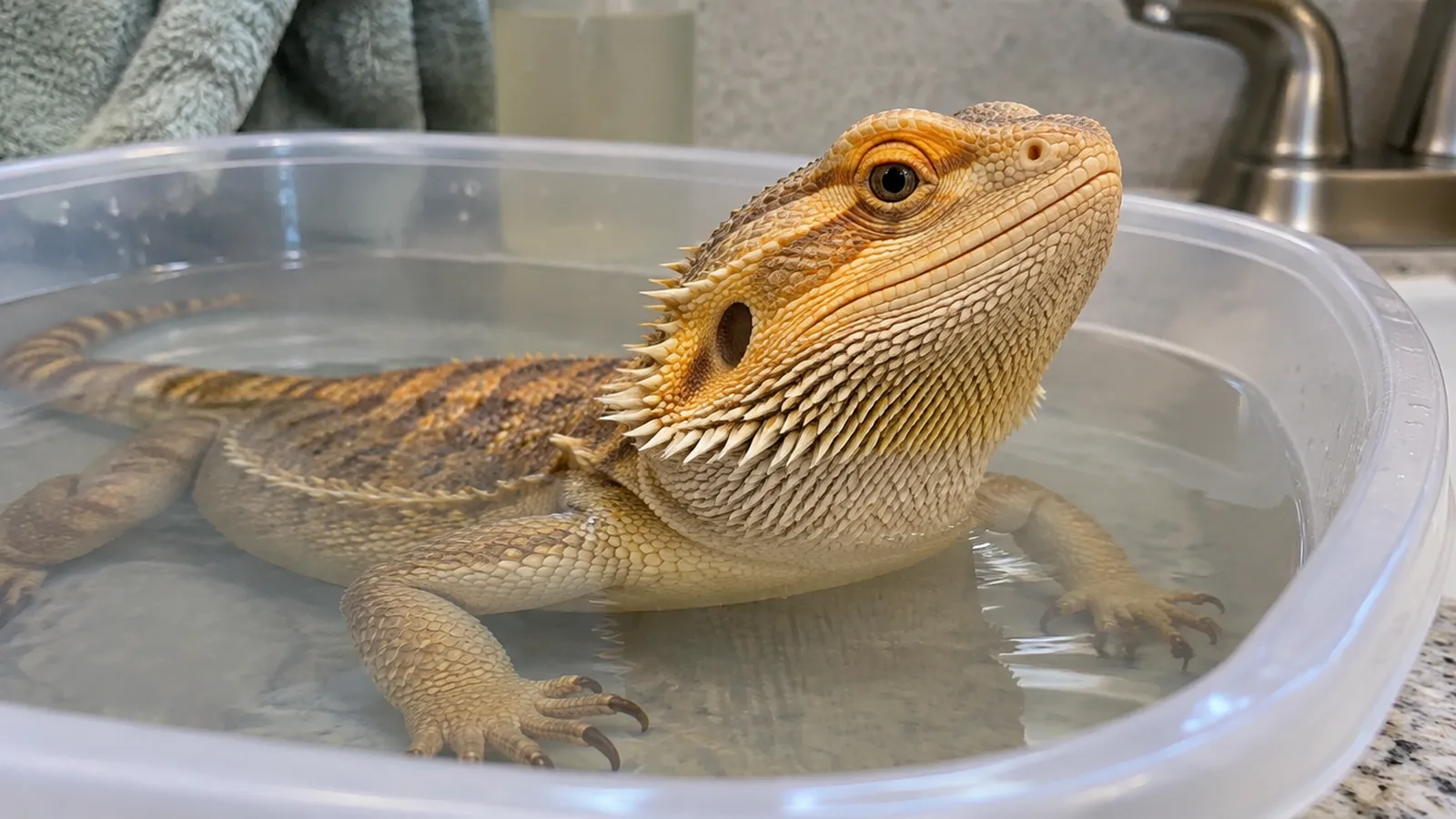
Next, give your reptile a warm soak. Place it in a tub of shallow, lukewarm water at around 29–32°C (85–90°F), deep enough to reach its chest or the middle of its body but not so deep that it has to struggle to keep its head up. Let it soak for 15–20 minutes, and stay with it the whole time. Many reptiles pass waste during or shortly after a soak, and it helps with hydration either way.
Make sure fresh water is always available, mist species that drink droplets, and keep humidity at the right level; see how to raise humidity. Gentle supervised time out of the enclosure can help get things moving, too. Hold off on feeding until your reptile has passed waste.
If you've found sand, bark or gravel in old droppings, switch to a safer substrate or feed your reptile in a separate dish.
Don't try to massage out a hard lump, and don't give oils or laxatives unless a vet has told you to. Both can cause serious injury.
When to see a vet
See a reptile vet if you can feel a hard swelling that doesn't change after soaking, if your reptile is straining and passing nothing, or if you see blood. Tissue sticking out of the vent (a prolapse) is an emergency. You should also see a vet if your reptile is lethargic, weak or off its food, or if you've seen no improvement after 3–5 days of warm soaks and correct temperatures. Vets can take X-rays to check for impactions, eggs or masses, and can safely give fluids or enemas.
How to prevent it
Most constipation can be prevented with good husbandry: correct temperatures with a thermostat, clean water and the right humidity, sensibly sized meals on the right schedule, safe substrates, and regular gentle activity for sedentary species.
FAQ
How long can a snake go without pooping? Often 1–2 weeks after a meal; longer for large or sedentary species.
Do warm baths help? Yes, shallow lukewarm soaks for 15–20 minutes.
When is it serious? Hard swelling, blood, prolapse, lethargy or no improvement in a few days.