About the blood python
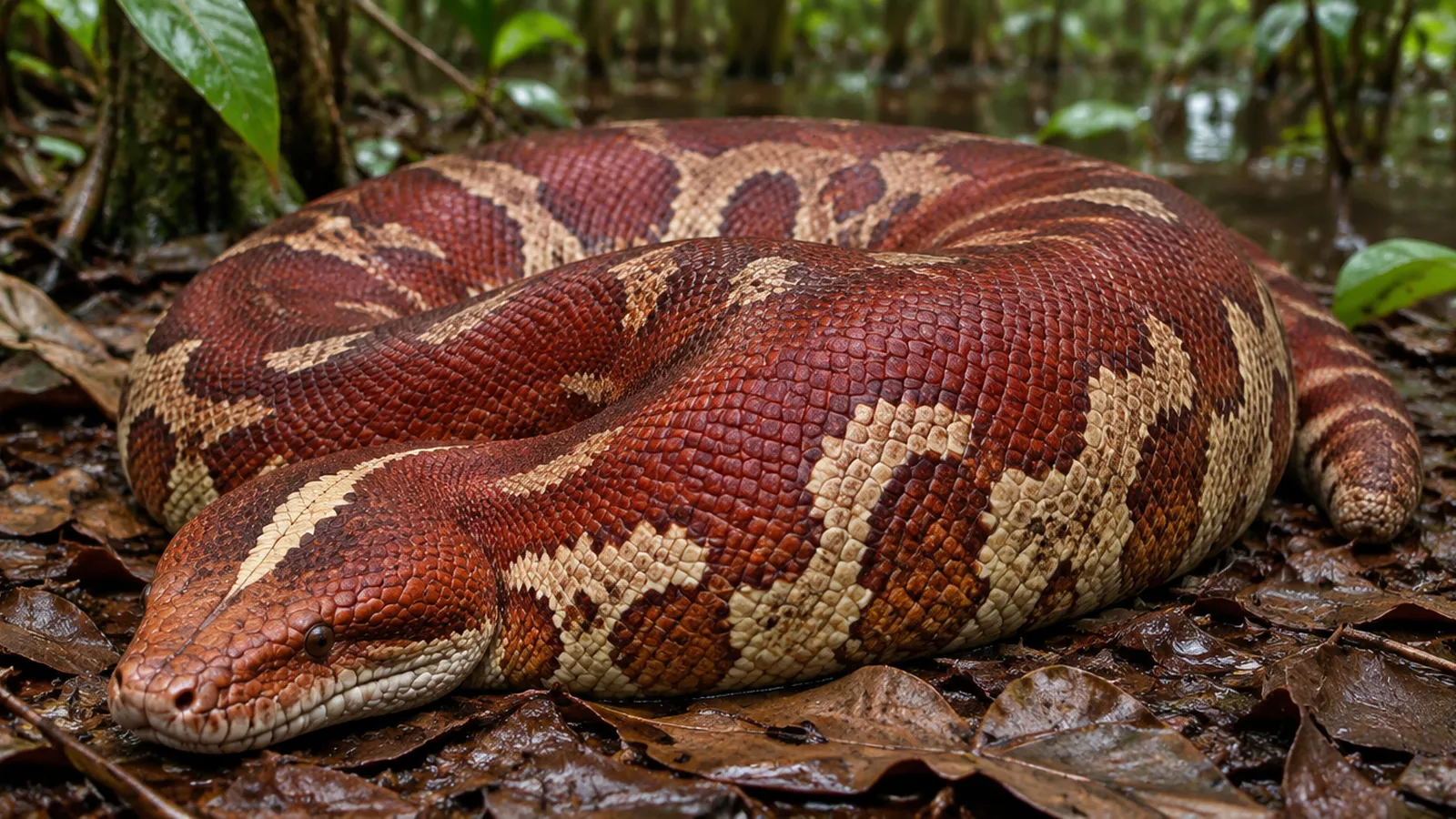
The blood python (Python brongersmai) is one of the most eye-catching pythons in the hobby, yet for a long time it was one of the most overlooked. In the wild it lives in the swamps, flooded forests and palm oil plantations of Malaysia, Sumatra and southern Thailand, where it lies in wait among leaf litter and shallow water for rats and other small mammals. Colours range from deep brick red to orange and yellow, often broken up by pale blotches along the sides. Two close relatives, the Sumatran short-tailed python (P. curtus) and the Borneo short-tailed python (P. breitensteini), are kept in exactly the same way.
For more than 50 years blood pythons were collected mainly for the skin trade rather than as pets. The few that did reach the pet trade were wild-caught adults that were stressed, dehydrated and often full of parasites. Many refused to eat for months, and they quickly picked up a reputation for being bad-tempered. That reputation has stuck around far longer than it deserves to. Today's captive-bred blood pythons are a completely different animal, and with calm, regular handling most grow into steady and predictable adults. They do suit keepers who already have some snake experience, simply because a full-grown blood python is an extremely heavy and powerful snake for its length.
Housing
Blood pythons are not climbers. They spend nearly all their time on the ground, so floor space is far more important than height. A hatchling can start off in a 20–30 gallon enclosure or a suitably sized tub, moving up to around 90×45×45 cm (36×18×18 in) as a juvenile. An adult needs at least 120×60×60 cm (48×24×24 in), and a large female will appreciate something closer to 150×60×60 cm (60×24×24 in).
Whatever enclosure you choose, it needs to be secure, well ventilated and able to hold humidity. PVC enclosures are ideal because they hold heat and moisture well and are easy to clean. Glass tanks with full mesh lids tend to dry out too quickly unless you cover part of the lid. Inside, provide a hide large enough for the snake to fit its whole body into, along with a big, heavy water bowl that it can't tip over. Blood pythons like to soak, so a bowl large enough for the snake to climb into is a bonus.
Substrate
A substrate that holds moisture is the way to go with blood pythons. Cypress mulch, coco husk or a soil and bark mix all work well. Lay it 5–10 cm (2–4 in) deep so the bottom layer stays slightly damp while the surface dries out between mistings. Paper towel is fine for quarantine or for very young snakes, as it makes it easy to keep an eye on droppings, but it won't help much with humidity. Avoid pine and cedar shavings, which give off oils that irritate a snake's airways.
Heating
Blood pythons don't need a scorching basking spot. What they need is steady, moderate warmth. Aim for a hot spot of around 31–32°C (88–90°F) and an ambient temperature of 27–29°C (80–84°F) across the rest of the enclosure. At night it's fine to let things drop by a couple of degrees, but try to keep it above about 24°C (75°F).
A heat mat under one end of the enclosure or a radiant heat panel overhead both work well. Whichever you use, it must be connected to a thermostat. An unregulated heat mat can easily climb well above safe temperatures and burn a heavy snake that lies on it for long periods. Always check the temperature where the snake actually sits with a digital thermometer, not just the air temperature.
Lighting
UVB isn't essential for blood pythons, but a low-output UVB tube and a regular 12-hour day and night cycle are a good addition. Many keepers find that a consistent light cycle helps with feeding response and, later on, with breeding.
Humidity
Coming from swampy forest, blood pythons need humidity of around 60–70%, rising a little when they go into shed. If the humidity is too low you'll start seeing stuck sheds, particularly around the tail tip and eyes. Misting the enclosure once a day and adding a humid hide filled with damp sphagnum moss usually solves this. See our guide on how to raise humidity in a terrarium for more ideas.
The opposite problem is just as important. A soaking wet enclosure leads to blisters and scale rot on the belly, so let the surface of the substrate dry a little before you mist again, and make sure there's some airflow.
Feeding
Rats are the blood python's favourite meal, and most captive-bred babies will take them from the start. Hatchlings can be offered a hopper mouse or rat pup every 7 days. Juveniles move on to weaned rats every 10 days or so, and adults do well on a small to medium rat every 14–21 days.
Always feed frozen-thawed prey rather than live. A live rat left in an enclosure with a snake that isn't hungry can cause serious and even fatal injuries. Make sure the prey is fully thawed and warmed right through before offering it; our guide on how to thaw frozen rodents walks through it step by step.
Adult blood pythons put on weight very easily, so once your snake reaches adult size, space out the meals and keep the prey modest. A healthy blood python should be thick and firm, but you shouldn't see rolls of fat or a body that looks swollen behind the head.
Handling
The key to handling a blood python is confidence. Hesitant, jerky movements tend to make them defensive, so pick the snake up smoothly from underneath and support as much of the body as you can. Juveniles can be hissy and quick to strike at first, but most settle down with short, regular handling sessions over a few weeks. Avoid handling for at least 48 hours after a meal to prevent regurgitation.
Sexing
Adult females are noticeably larger and heavier than males. Males have longer, thicker tails that taper more gradually after the vent, and their pelvic spurs (small claw-like structures either side of the vent) are usually larger. To be certain, hatchlings can be popped and older snakes can be probed by an experienced keeper or reptile vet.
Breeding
Blood pythons are usually ready to breed at around 3–4 years old, when females have reached a good size and weight. Breeding is normally triggered by a slight cooling period in the cooler months, with night-time temperatures dropping by a few degrees for several weeks. The male is then introduced to the female's enclosure. Females lay a clutch of eggs roughly 2–3 months after a successful pairing, and these are usually incubated artificially at around 31°C (88°F) for about 60–70 days.
Only breed healthy, well-established adults, and give females a full year of rest and good feeding between clutches so they can recover their condition.
Common health problems
Most problems with blood pythons come back to husbandry. Low humidity causes stuck sheds, a wet enclosure causes belly blisters, and an overheated enclosure or a big meal followed by handling can cause regurgitation. Respiratory infections show up as wheezing, bubbles around the mouth or the snake holding its head up to breathe, and these need a reptile vet. A healthy blood python should have clear eyes, full one-piece sheds, a strong feeding response and a firm, rounded body.
FAQ
How big does a blood python get? Usually 4–6 ft, and very thick for its length.
Are blood pythons aggressive? Captive-bred ones are usually calm with steady handling.
What humidity does a blood python need? About 60–70%.