What is egg binding?
Egg binding (also called dystocia) is when a female snake is unable to pass some or all of her eggs. Sometimes she lays part of her clutch normally and one or two eggs get stuck; in other cases, she can't lay any eggs at all. Retained eggs can harden, become infected, damage her reproductive tract or block her gut, and a snake with a complete clutch stuck inside will almost always die without veterinary help.
It's one of the most serious problems a breeding female can face, but with good preparation it can often be prevented, and with quick veterinary treatment, many snakes recover well.
Signs of egg binding
The most common sign is a female that has laid part of her clutch, but you can still see or feel eggs inside her more than 24 hours after laying started. At that point, she is most likely egg bound.
Other signs include a female that is well past her expected laying date and seems restless, constantly searching the enclosure, straining, or lying stretched out with swellings visible along the lower third of her body. As the problem continues, she may become weak, lethargic, or develop a prolapse (tissue coming out of the vent), which is an emergency.
Keep in mind that timing varies between species. Most snakes lay around 7–14 days after their pre-lay shed, but some, such as Durango mountain kingsnakes, often take longer than two weeks between their pre-lay shed and laying. A first-time breeder might worry and think the snake is egg bound, when in fact she just needs more time to settle into her laying box.
Common causes
The most common cause is no suitable place to lay. If a female can't find a laying site she's happy with, she may hold on to her eggs until it's too late. This is why house snakes often lay in their water bowls, and why a proper laying box is so important.
Incorrect temperatures are another major factor. When a female is gravid, her temperatures and conditions need to be right for egg laying, as cold snakes don't have the energy or muscle function to lay normally.
Poor body condition also plays a part. Females that are underweight, overweight, young or bred too often may not have the strength to pass their eggs. Calcium deficiency, oversized or misshapen eggs, dehydration, stress and underlying illness can all contribute too.
What to do
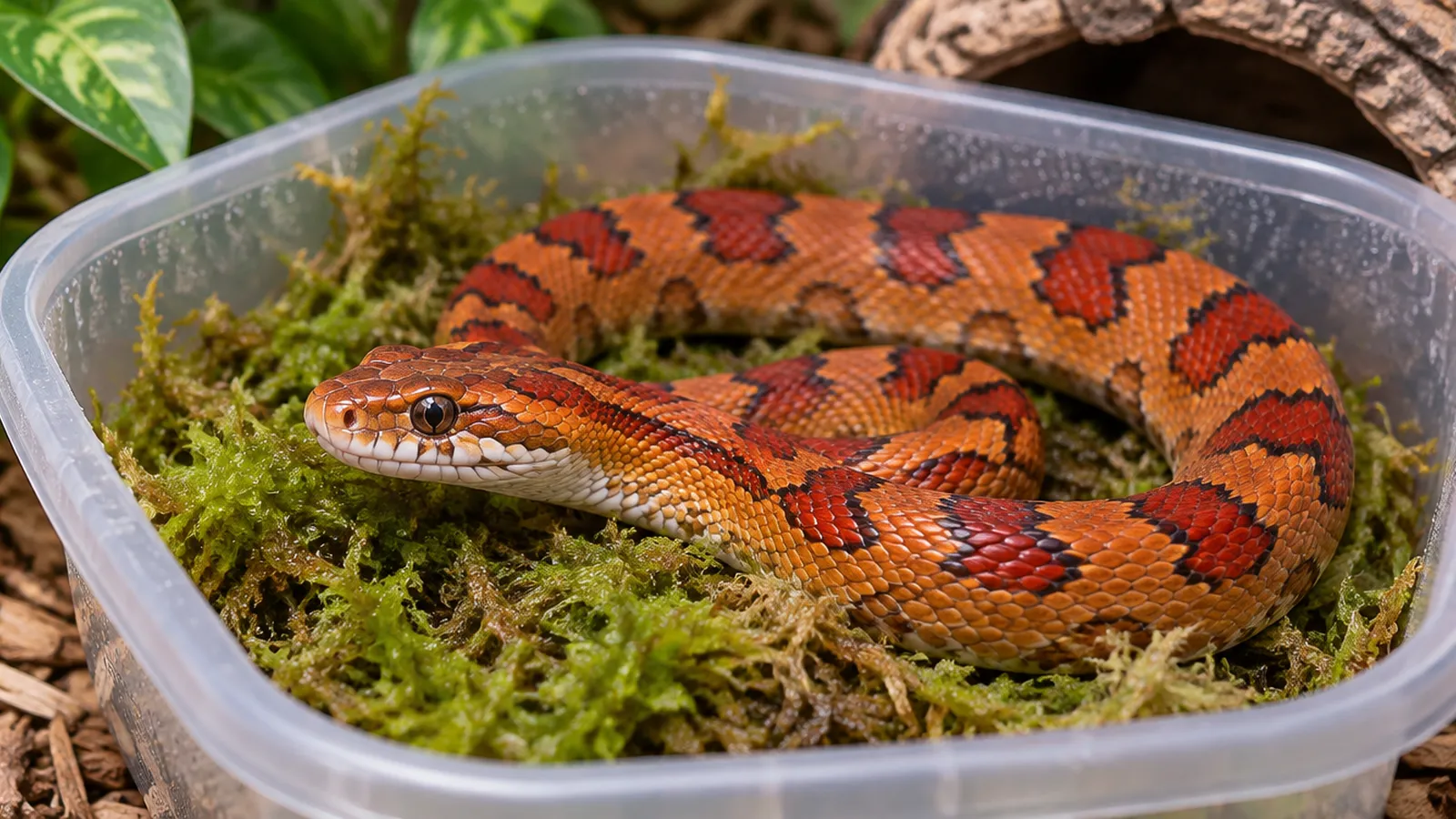
If you think your snake is egg bound, first make sure everything in her enclosure is right: correct temperatures, a damp laying box filled with moss, and peace and quiet. Some females will lay once their conditions are corrected.
If eggs are still visible 24 hours after she started laying, or she shows signs of distress, take her to a reptile vet straight away. A vet can examine her, take X-rays, and decide on the right treatment. This may include giving calcium or medication to help contractions, carefully draining (aspirating) the eggs with a needle so they collapse and can be passed, or surgery to remove the eggs if they won't come out. Aspiration needs to be done as soon as possible after laying attempts stop, and if the eggs aren't passed within around 48 hours of aspiration, surgery is usually needed.
Don't try to massage eggs out yourself, and don't try aspiration or medications at home. These procedures can easily rupture the oviduct or cause fatal internal injuries if done wrong.
How to prevent it
Prevention starts long before the eggs are due. Only breed females that are mature, healthy and at a good weight, and give them at least six months of rest between breeding seasons. When she's gravid, provide a laying box: a container with an entrance hole, filled with damp sphagnum moss or vermiculite, placed at a comfortable temperature in a quiet part of the enclosure. Keep temperatures correct, provide fresh water and avoid unnecessary handling or disturbance.
Watch females closely after their pre-lay shed, and count eggs once they're laid, comparing the number with what you expected from earlier feels or the female's body shape.
FAQ
How do I know if my snake is egg bound? Eggs still visible 24 hours after laying started, or straining and restlessness past her due date.
Can I fix it at home? Only provide supportive conditions; leave treatments to a vet.
How long after a pre-lay shed do snakes lay? Usually 7–14 days, but some species take longer.