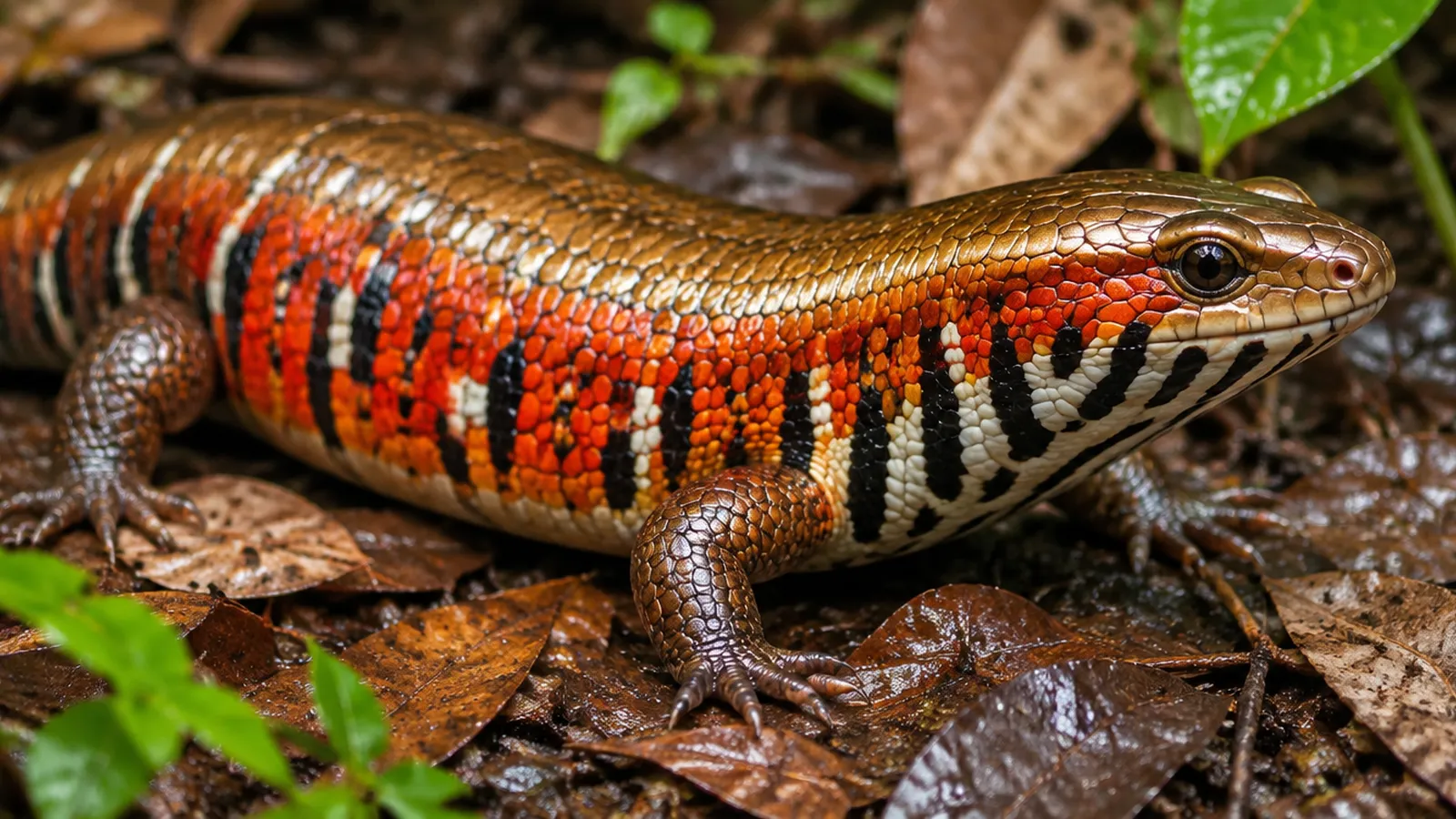
About the fire skink
The African fire skink (Lepidothyris fernandi) lives on the forest floors of West and Central Africa, from Ghana to Cameroon and the Congo basin. It's one of the most colourful skinks in the world: glossy scales with bands of bright red, orange, black, gold and white along its sides, which glow almost like embers.
Most fire skinks imported at around 30 g are about a year old, and they reach adult size of 50–60 g at around two years. Adults measure around 30–38 cm (12–15 in) including the tail. One thing to know when buying: all young fire skinks tend to look like females at first. Males only develop their brighter colours and broader heads once they're well fed and mature, so it's a good idea to feed your skinks well for at least a month before trying to guess their sex.
Fire skinks are hardy and enthusiastic eaters, which makes them a good choice for newer keepers. They are shy, though, and spend much of their time burrowing, so they suit someone who's happy to watch rather than handle.
Housing
Juveniles can be kept in an enclosure of around 60×45×45 cm (24×18×18 in). Adults need at least 90×45×45 cm (36×18×18 in), and 120×60×60 cm (48×24×24 in) is better.
Floor space and substrate depth matter most. Add cork bark, flat stones and half-buried hides that the skink can tunnel underneath. A shallow water dish for drinking is essential.
Substrate
Substrate is the most important part of fire skink care. Use a mix of peat moss and reptile bark, or topsoil and coco fibre, at least 15 cm (6 in) deep. This gives them room to burrow and holds the moisture they need. Add a layer of leaf litter on top for extra cover.
Heating
Provide a basking spot of 32–35°C (90–95°F) and a cool side of 24–27°C (75–80°F). At night, temperatures can drop to about 21–24°C (70–75°F). A basking bulb on a thermostat or dimmer works well.
Lighting
Fire skinks are active during the day and need UVB to process calcium properly. You can use two bulbs (one for UVB and one for heat), or a combined bulb that does both. Give them 10–12 hours of light a day, dropping to around 8 hours in winter if you want to mimic natural seasons.
Humidity
Coming from humid forest floors, fire skinks need relatively high humidity, around 70% in the substrate. Mist the enclosure once or twice a day. If the substrate starts drying out, mist more heavily or pour water into the lower layers to re-dampen them once a month or so.
What matters most is the moisture of the substrate. As long as the lower layers stay damp, the air humidity at the surface can drop as low as 40% without causing problems.
Feeding
Fire skinks are voracious feeders and will eat almost anything that moves and fits in their mouth. Feed juveniles daily with crickets, roaches and worms, and adults three or four times a week with crickets, roaches, locusts and worms. Dust insects with calcium at most feeds and use a multivitamin once a week. Keep an eye on adults' weight, as they can easily become overweight.
Handling
Fire skinks are shy, and many will thrash or bite when first picked up. Short, gentle handling sessions over several weeks help them get used to you. Never grab a fire skink by the tail; it can drop off.
Sexing
Once mature and well fed, males develop broader heads, brighter red colouring on the sides and a thicker tail base. Females tend to stay slimmer with duller colours. Wait until your skinks are at least a year old and in good condition before deciding their sex.
Breeding
Fire skinks are usually ready to breed at around 2 years old. Females lay clutches of around 4–9 eggs in damp, deep substrate, and some females will guard their eggs. Eggs hatch after around 40–50 days at 28°C (82°F). Separate males from each other, as they'll fight.
Common health problems
Shallow or dry substrate is the most common cause of problems, leading to dehydration and stuck shed, especially on the toes; see how to fix stuck shed. Housing males together causes injuries, and missing UVB leads to metabolic bone disease. A healthy fire skink has bright colours, clear eyes, burrows and surfaces regularly, sheds cleanly and has a good appetite.
FAQ
Are they good for beginners? Yes, if you don't need a handling pet.
How deep should substrate be? At least 15 cm (6 in).
Can they live together? Males can't; many are kept alone.