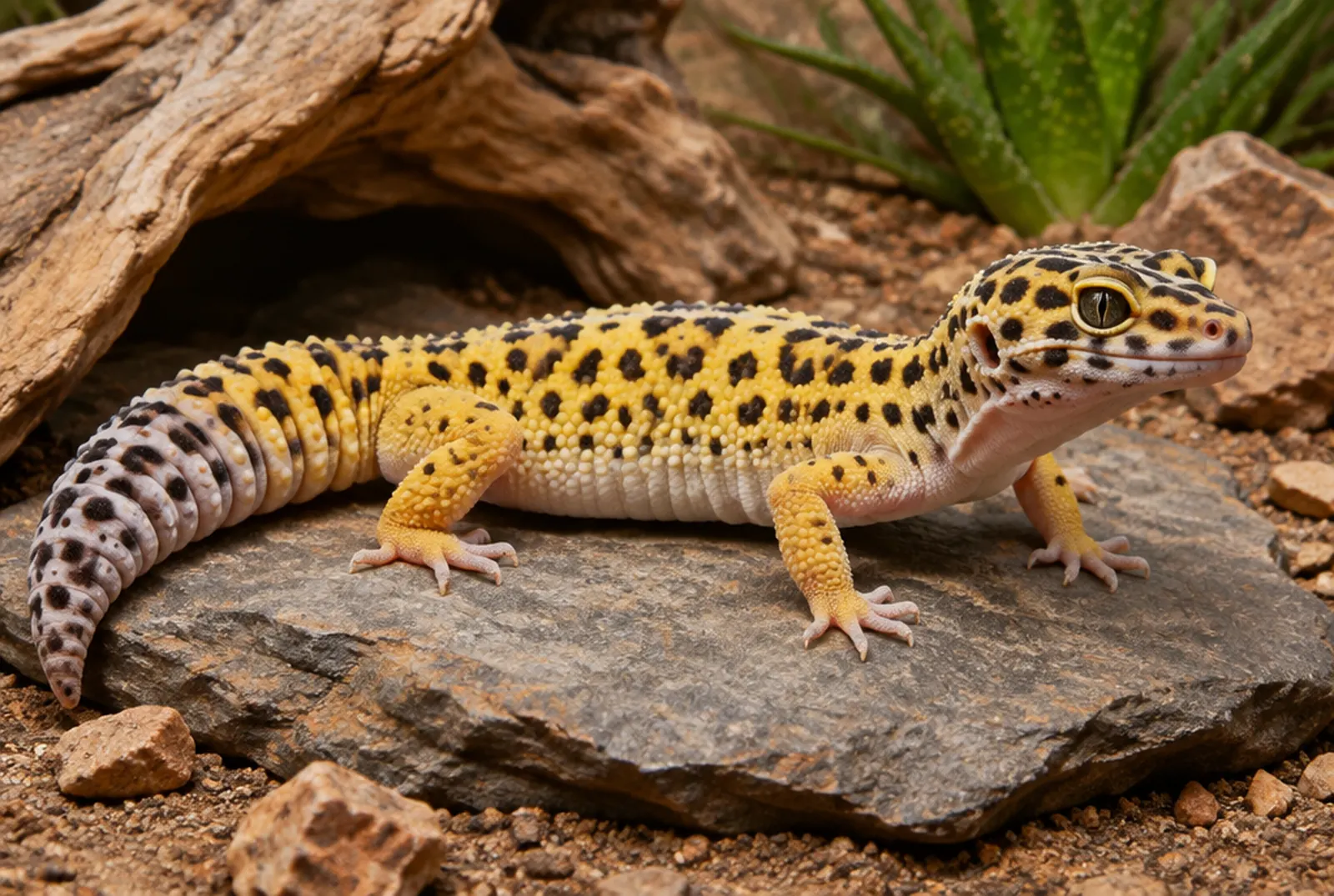
What makes a reptile "beginner friendly"?
There's no such thing as a no-effort reptile, but some species are much more forgiving than others. A good first reptile:
- Stays a manageable size, so a standard enclosure lasts its whole life.
- Eats readily, ideally foods that are easy to buy.
- Tolerates handling and isn't easily stressed.
- Has well-understood care with a wide margin for error on temperature and humidity.
- Is captive-bred and widely available, so it's healthy and legal.
Lifespan matters too. Many beginner reptiles live 15–20 years, so think about where you'll be in a decade before you buy.
The 9 best beginner reptiles
| Species | Adult size | Lifespan | Minimum enclosure | Why it's good |
|---|---|---|---|---|
| Leopard gecko | 7–10 in | 15–20 yr | 36×18×18 in | Hardy, calm, insects only |
| Crested gecko | 7–9 in | 15–20 yr | 18×18×24 in | Room temperature, powdered diet |
| Corn snake | 3–5 ft | 15–20 yr | 4×2×2 ft | Docile, reliable feeder |
| Ball python | 3–5 ft | 20–30 yr | 4×2×2 ft | Calm, slow, compact |
| Bearded dragon | 16–24 in | 10–15 yr | 4×2×2 ft | Personable, active by day |
| Blue-tongued skink | 18–24 in | 15–20+ yr | 4×2×2 ft | Tough, omnivore, very handleable |
| Kenyan sand boa | 15–32 in | 15–20+ yr | 24×18×12 in (male) | Small, gentle, simple |
| Rosy boa | 2–3 ft | 25–30+ yr | 36×18×18 in | One of the calmest snakes |
| African fat-tailed gecko | 7–9 in | 15–20+ yr | 36×18×18 in | Slow, placid, easy feeder |
If you want a lizard to handle
Leopard geckos are the classic choice: small, nocturnal, insect-eating and usually very tolerant of gentle handling. Bearded dragons and blue-tongued skinks are bigger and more interactive, but need stronger heat, UVB and a larger enclosure.
If you don't want to keep live insects
Crested geckos eat a complete powdered diet mixed with water, live at normal room temperature, and need only occasional insects. Snakes eat frozen-thawed rodents every week or two, so there's nothing live to keep.
If you want a snake
Corn snakes are the standard recommendation: hardy, docile and easy to feed. Ball pythons are calmer and slower but sometimes go off food. Kenyan sand boas and rosy boas are smaller and need less space.
5 popular reptiles beginners should avoid
| Species | Why it's hard |
|---|---|
| Burmese python | Grows to 12–16 ft and 100+ lb; restricted in many places |
| Sulcata tortoise | Reaches 70–100+ lb, lives 70+ years, needs a big outdoor pen |
| Argentine tegu | 4 ft, needs an 8×4×4 ft enclosure and intense heat |
| Green iguana | 5–6 ft, strict diet, often defensive as adults |
| Mangrove snake | Rear-fanged and mildly venomous, defensive |
Chameleons and turtles are also often sold as starter pets. A veiled chameleon is a hands-off display animal with demanding water and UVB needs, and a red-eared slider needs a large heated, filtered aquarium for decades.
How much does a beginner reptile setup cost?
The animal is often the cheapest part. Budget for the enclosure, a thermostat, heat source, UVB lighting (for most lizards), hides, substrate, a thermometer and supplements. Our beginner reptile setup checklist walks through everything, and you can check whether an enclosure is big enough with the enclosure size checker.
Before you buy
- Set up and test the enclosure for a week before the animal comes home.
- Buy captive-bred from a reputable breeder or rescue.
- Find a reptile vet near you in advance.
- Check local laws: some species are restricted in some places.
Still deciding? Type any species into our AI Care Finder for a quick care summary.
FAQ
What is the easiest reptile for a beginner? Leopard geckos, crested geckos and corn snakes.
Are bearded dragons good for beginners? Yes, with a 4×2×2 ft enclosure, strong UVB and a varied diet.
What reptiles should beginners avoid? Giants and specialists: Burmese pythons, sulcatas, tegus, iguanas and venomous snakes.