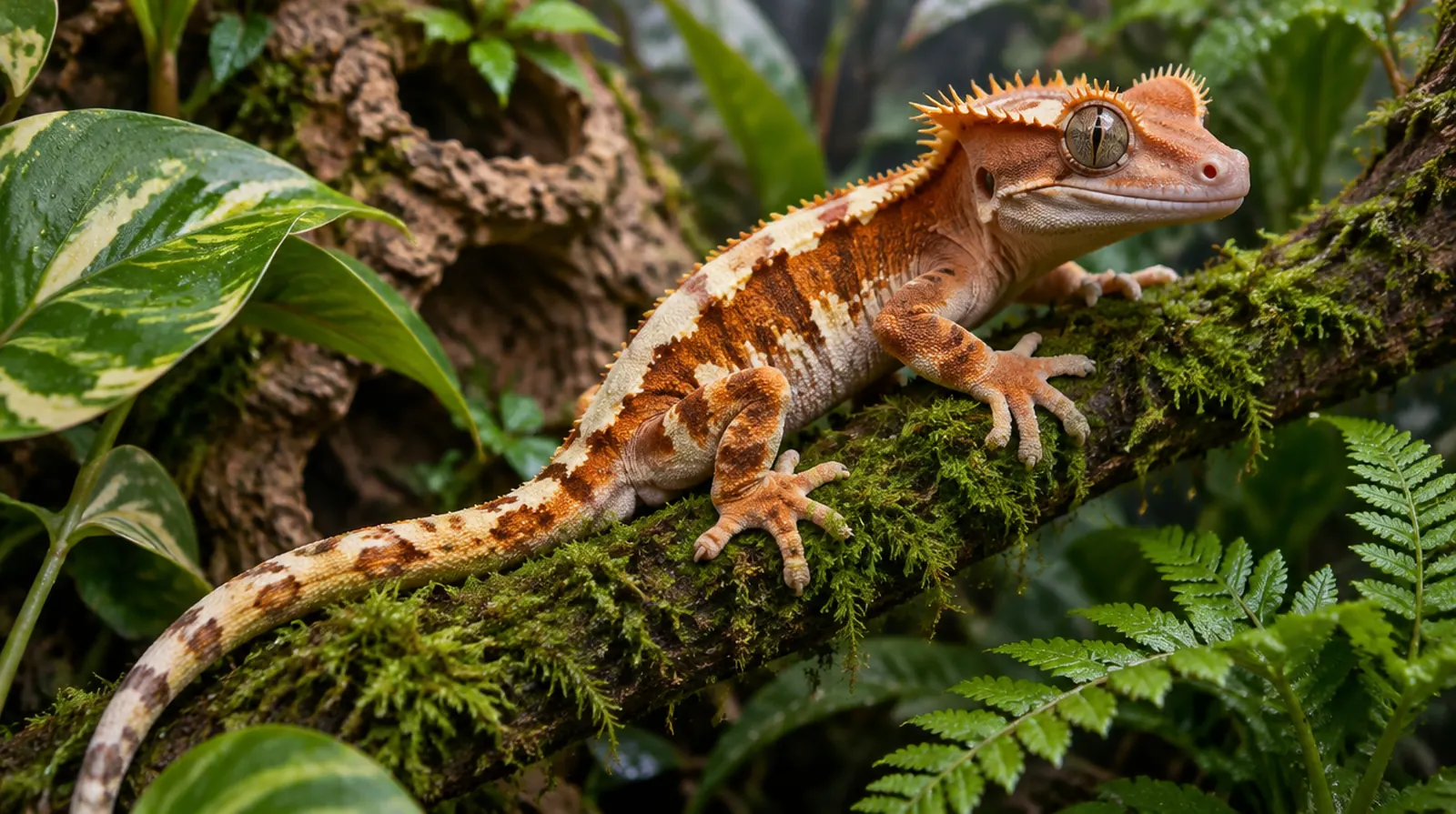
Side-by-side comparison
| Leopard gecko | Crested gecko | |
|---|---|---|
| Origin | Dry grassland and rocky areas of Pakistan, Afghanistan, NW India | Rainforest of New Caledonia |
| Adult size | 7–10 in | 7–9 in |
| Lifespan | 15–20+ years | 15–20 years |
| Activity | Nocturnal/crepuscular, on the ground | Nocturnal, climbing |
| Enclosure | 36×18×18 in minimum (floor space) | 18×18×24 in minimum (height) |
| Heat | Warm surface 90–95°F (32–35°C) | Room temperature 72–78°F (22–26°C); keep below 82°F (28°C) |
| Humidity | 30–40%, plus a humid hide | 50–60%, misted higher in the evening |
| Diet | Live insects only | Complete powdered diet + occasional insects |
| Handling | Calm, slow | Jumpy, but tolerant |
| Tail | Drops and regrows | Drops and does not regrow |
Choose a leopard gecko if…
- You want a calm, slow gecko that's easy to hold.
- You're happy to keep live insects (crickets, dubia roaches, mealworms).
- Your home is cool or dry, since you'll be adding heat anyway.
- You prefer a horizontal enclosure.
Choose a crested gecko if…
- You'd rather not keep live insects every week.
- Your home stays at a normal room temperature and doesn't get hot in summer.
- You like the idea of a planted, vertical terrarium.
- You don't mind a more jumpy gecko.
Setup cost
Both are inexpensive to set up compared with most reptiles. Leopard geckos need a heat source and thermostat, and benefit from low-level UVB. Crested geckos often need no heat, but you'll want a mister or regular hand-misting, plants and branches. See the best crested gecko enclosures and our beginner setup checklist.
Other geckos to consider
- Gargoyle gecko: care like a crested gecko, more insect-driven, and the tail regrows.
- African fat-tailed gecko: care like a leopard gecko, but needs more humidity.
FAQ
Which is easier? Both. Crested geckos skip the live insects and heat; leopard geckos are calmer to handle.
Which likes handling more? Leopard geckos are usually calmer.
Can they live together? No: completely different needs.
Want more options? See our list of the best beginner reptiles.