There's always a reason
Getting a snake to eat isn't always as simple as putting a mouse in the enclosure and finding it gone in the morning. Sometimes a snake refuses food and can be tricky to get going again. The good news is that there's always a reason, and working through the possibilities methodically usually solves it. If you keep ball pythons, see also our ball python not eating guide.
Check the enclosure first
When a snake refuses food, the first thing to look at, especially if it's recently arrived, is whether its environment is right.
Is the enclosure too large? Many keepers are so eager to give a hatchling a big vivarium that they put it straight into a 90–120 cm (3–4 ft) enclosure. A small snake in a big, open space can feel exposed and stressed, and may stop eating altogether. Enclosures should get larger gradually as the snake grows. A small tub or enclosure is often the best place for a nervous young snake.
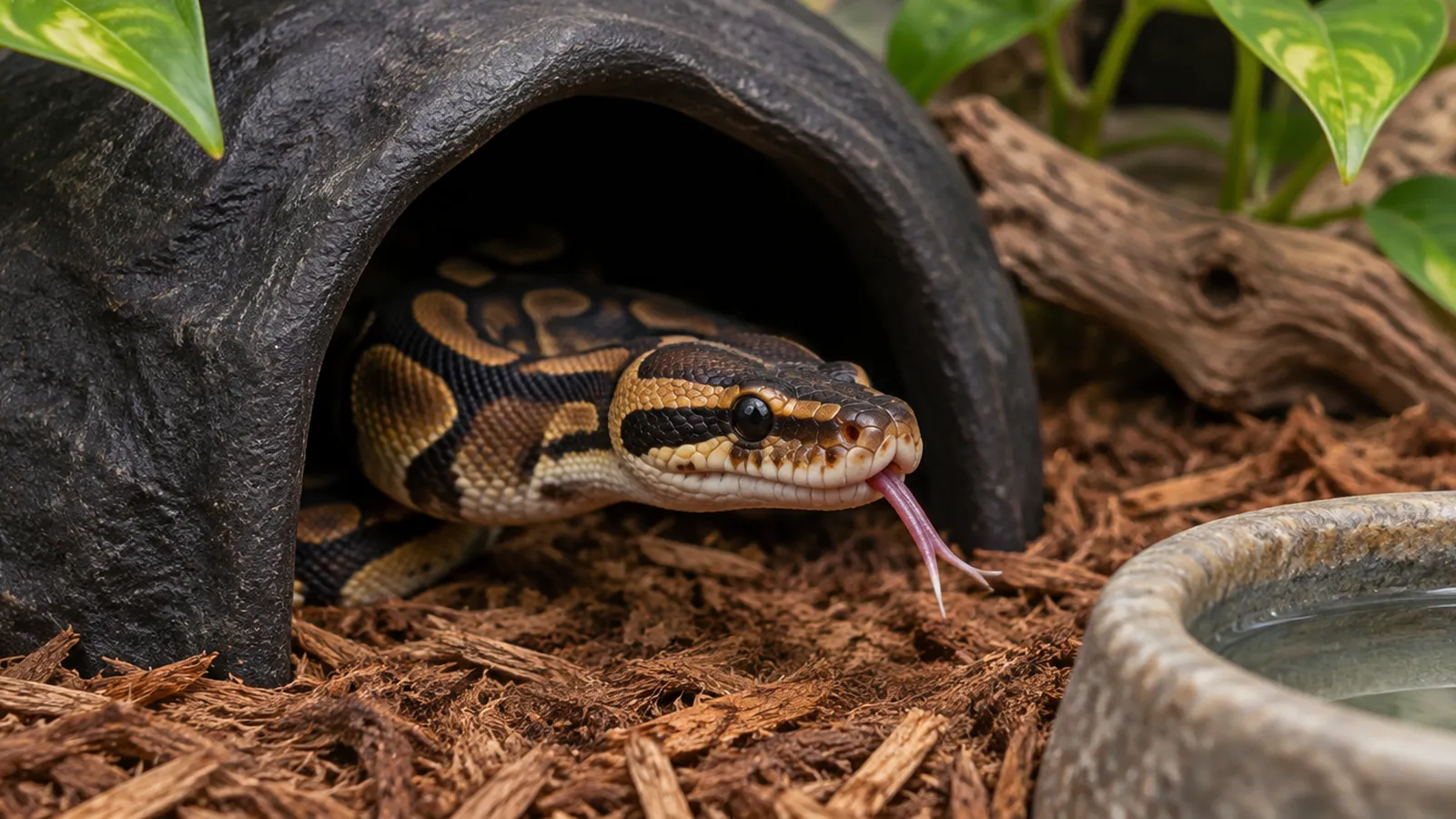
Are there enough hiding places? Snakes need to feel secure. Provide snug hides at both the warm and cool ends, plus plenty of cover such as artificial plants, bark and branches. A deep layer of substrate also helps snakes feel hidden. If your snake still won't feed with plenty of cover, try placing the food inside or at the entrance of its hide; the snake may feel secure enough to eat, but not to venture out.
Are the temperatures right? A snake that's too cool can't digest food and often won't eat. Check the warm and cool ends with a digital thermometer, and make sure heat sources are on a thermostat.
Normal reasons for not eating
Many snakes stop eating for completely natural reasons. Most refuse food when they're in shed, from the time their eyes turn cloudy until a few days after shedding. Many species also slow down or stop eating in autumn and winter, and adult males often go off food during the breeding season. Gravid females usually stop eating as they get close to laying.
Ball pythons are famous for long feeding breaks. It can be unsettling for new keepers, but some healthy ball pythons go six months or more without a meal; one breeder reported a female going 13 months without food and no visible health problems before she started eating again on her own. As long as the snake is holding its weight and otherwise healthy, there's usually no need to worry.
Tips to get a snake eating
Offer food at the right time. Most snakes feed best in the evening or at night. Offer food just after the lights go out.
Warm the prey properly. Prey should be warm all the way through, and warming the head with a hairdryer just before offering can trigger a strike. See how to thaw frozen rodents.
Try different movement. Some snakes want prey wiggled in front of them; others prefer it left quietly by the entrance of their hide overnight.
Feed in privacy. Cover part of the enclosure and leave the room. Some snakes eat best when left alone with their food.
Try a different prey type or size. Some snakes prefer rats to mice, or the other way around, and some prefer a different colour of rodent. A smaller meal can also be more appealing.
Freshen up the enclosure. One experienced ball python breeder found that doing a complete bedding change every time the snake defecated, rather than just spot-cleaning, got some of his toughest feeders eating at the next opportunity. The idea is that in the wild, a snake moves to a new spot after eating and leaving its scent behind, in the best position to catch prey again. Moving a non-feeding snake to a different tub or enclosure, or even changing substrate type, can have a similar effect.
Scenting. For snakes that naturally eat lizards or other prey, such as some kingsnakes and house snakes, rubbing a mouse with the scent of their preferred prey can help them switch. This is usually a last resort.
Don't offer food too often. Offering food every day can stress a snake further. Offer once a week, and if it's refused, remove it and try again a week later.
When to see a vet
See a reptile vet if your snake is losing noticeable weight, looks thin with a visible spine, or shows other signs of illness such as wheezing, bubbles around the mouth, regurgitation, lumps, or abnormal droppings. Weigh your snake every couple of weeks so you can spot weight loss early. A vet can check for parasites, infections and mouth problems that might stop a snake from eating.
FAQ
How long can a snake go without eating? Healthy adults can go weeks or months; watch weight.
Why won't my new snake eat? Stress from the move. Give it a small secure enclosure, wait a week, then offer food at night.
Should I feed live prey? Try frozen-thawed tricks first; supervise any live feeding.