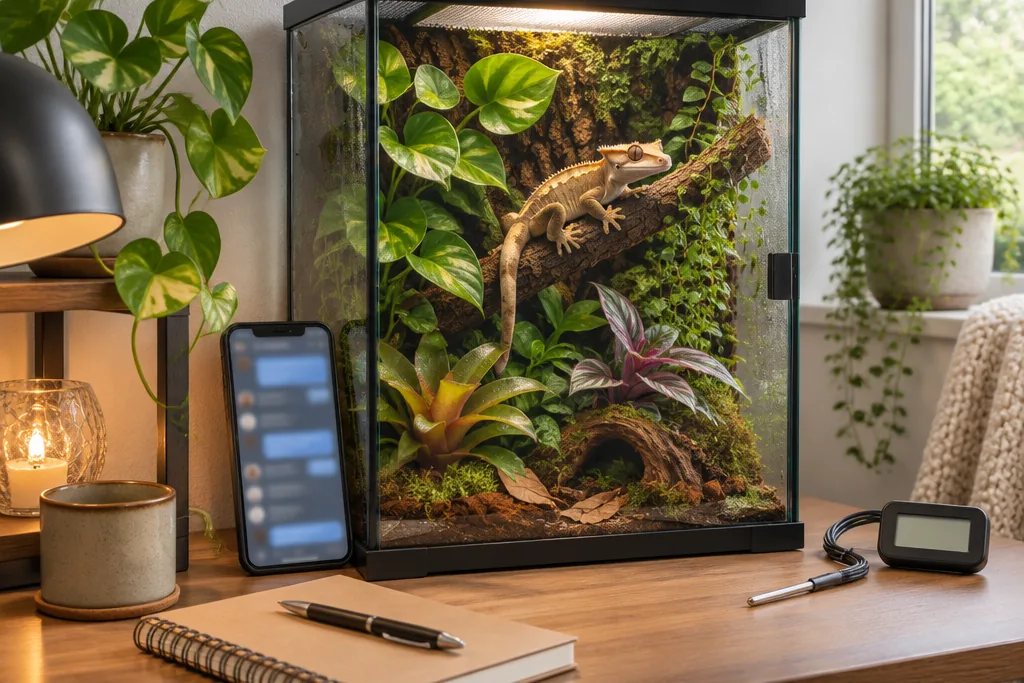
Quick rules for every reptile
- Measure surfaces and air separately. Basking figures are surface temperatures, measured with an infrared thermometer. Cool-side and night figures are air temperatures from a digital probe thermometer.
- Always give a gradient. Reptiles control their body temperature by moving between warm and cool areas, so one end should be hot and the other noticeably cooler.
- Put every heat source on a thermostat, and guard bulbs and heaters that the animal can reach.
- Humidity is measured in the middle of the enclosure with a digital hygrometer. Many dry-climate species still need a humid hide or damp burrow.
- Amphibians are different. Most frogs and axolotls need cool conditions and no basking light. Overheating kills them faster than cold.
Temperature and humidity chart
69 species, grouped by type. Tap a species for its full care guide, including heating equipment, UVB, diet and handling.
| Species | Basking / warm | Cool side / ambient | Night | Humidity | Min enclosure | Level |
|---|---|---|---|---|---|---|
| African house snake Boaedon fuliginosus (and related Boaedon species) | 85–90°F (29–32°C) | 72–78°F (22–26°C) | Low 70s °F (21–23°C) | 40–60% | Males 36×18×18 in | Beginner |
| Amazon tree boa Corallus hortulana | 86–90°F (30–32°C) perch, never above 90°F | 80–82°F (27–28°C) | 75–78°F (24–26°C) | 70–80%, 80–90% during shed | 3×1.5×3 ft (90×45×90 cm) | Advanced |
| Asian vine snake Ahaetulla prasina | Arboreal hot spot about 93°F (34°C) | 75–79°F (24–26°C) lower down | — | 80–90% with good ventilation | 36×18×36 in (90×45×90 cm), tall | Advanced |
| Aurora house snake Lamprophis aurora | 80–82°F (27–28°C) warm side | Room temperature, 68–75°F (20–24°C) | — | 40–60%, humid hide during shed | 24×12×12 in (60×30×30 cm) | Intermediate |
| Ball python Python regius | 88–92°F (31–33°C) warm hide/surface | 75–80°F (24–27°C) | Cool side not below ~72°F (22°C) | 60–80%, higher before shedding | 4×2×2 ft (120 gallons) for adults | Beginner |
| Black and white spitting cobra Naja siamensis | About 90°F (32°C) hot spot | 75–79°F (24–26°C) | — | 50–70% | 6.5×3.3×2.6 ft (200×100×80 cm) | Venomous – experts only |
| Black-headed python Aspidites melanocephalus | 90–95°F (32–35°C) | 75–80°F (24–27°C) | About 72°F (22°C) | 40–55% | 6×2×2 ft (180×60×60 cm) | Intermediate |
| Blood python Python brongersmai | 88–90°F (31–32°C), no hotter | 80–84°F (27–29°C) | Not below about 75°F (24°C) | 60–70%, slightly higher during shed | 4×2×2 ft (120×60×60 cm) | Intermediate |
| Brazilian rainbow boa Epicrates cenchria | 84–88°F (29–31°C) warm side | 75–80°F (24–27°C) | Adults ~75°F (24°C) | 70–90% | 4×2×2 ft (120×60×60 cm) | Intermediate |
| Bull snake Pituophis catenifer sayi | 85–88°F (29–31°C) warm side | 72–76°F (22–24°C) | 68–75°F (20–24°C) | 30–40%, raised to 40–50% during shed | 4×2×2 ft (120×60×60 cm) | Intermediate |
| Burmese python Python bivittatus | 90–95°F (32–35°C) | 75–80°F (24–27°C) | Not much below ~75°F (24°C) | 50–70% | Length ≥ snake length, width ≥ half | Intermediate |
| California kingsnake Lampropeltis californiae | 85–90°F (29–32°C) | 70–78°F (21–26°C) | Low 70s °F (21–23°C) | 40–60% | 4×2×2 ft (120×60×60 cm) | Beginner |
| Cape coral cobra Aspidelaps lubricus | 82–86°F (28–30°C) warm side | 68–75°F (20–24°C) | — | 30–50% | 24×16×12 in (60×40×30 cm) | Venomous – experts only |
| Corn snake Pantherophis guttatus | 85–90°F (29–32°C) warm side surface | 72–78°F (22–26°C) | Low 70s °F (21–23°C) | 40–60% | 4×2×2 ft for adults | Beginner |
| Dumeril's boa Acrantophis dumerili | 90–95°F (32–35°C) | 78–82°F (26–28°C) | About 75°F (24°C) | 50–70%, higher during shed | 6×2×2 ft (180×60×60 cm) | Beginner |
| Emerald tree boa Corallus caninus / Corallus batesii | 84–86°F (29–30°C) perch maximum | 78–84°F (26–29°C) | 68–77°F (20–25°C) | 70–85% | 3×2×3 ft (90×60×90 cm) | Advanced |
| False water cobra Hydrodynastes gigas | ~88–90°F (31–32°C) | ~75–78°F (24–26°C) | — | 50–70% | 8×3×3 ft for adults | Advanced |
| Green tree python Morelia viridis | 86–90°F (30–32°C) hot end | 75–79°F (24–26°C) | — | 50–60% by day, misted to 80–90% at night | 3×1.5×2 ft (90×45×60 cm) | Advanced |
| Kenyan sand boa Eryx (Gongylophis) colubrinus | 90–95°F (32–35°C) surface | 75–80°F (24–27°C) | 70–75°F (21–24°C) | 30–50%, slightly moister deep down | Males 24×18×12 in | Beginner |
| Mandarin rat snake Euprepiophis mandarinus | Warm spot 76–80°F (24–27°C) maximum | 72–78°F (22–26°C) | 61–65°F (16–18°C) | 60–80% plus a humid hide with damp sphagnum moss | 3×1.5×1.5 ft (90×45×45 cm) | Advanced |
| Mangrove pit viper Trimeresurus purpureomaculatus | 82–86°F (28–30°C) near upper perches | 75–79°F (24–26°C) lower down | — | 70–80% with good ventilation | 16×16×36 in (40×40×90 cm), tall | Venomous – experts only |
| Mangrove snake Boiga dendrophila | 85–88°F (29–31°C) | About 75°F (24°C) | — | 70–80% with good ventilation | 4×2×4 ft (120×60×120 cm) | Advanced |
| Mexican kingsnake Lampropeltis mexicana complex (L. greeri, L. mexicana, L. m. thayeri) | 82–86°F (28–30°C) warm side | 70–75°F (21–24°C) | A few degrees cooler | 30–50%, humid hide during shed | 24×12×12 in (60×30×30 cm) | Beginner |
| Milk snake Lampropeltis triangulum complex | 85–90°F (29–32°C) warm side | 70–78°F (21–26°C) | Low 70s °F | 40–60%, ~70% before shedding | 36×18×18 in (small subspecies) | Beginner |
| Mountain kingsnake Lampropeltis pyromelana | 82–84°F (28–29°C) warm side | 68–74°F (20–23°C) | 64–68°F (18–20°C) | 30–50%, humid hide during shed | 30×18×12 in (75×45×30 cm) | Intermediate |
| Nose-horned viper Vipera ammodytes | 86–90°F (30–32°C) | 68–75°F (20–24°C) | 61–64°F (16–18°C) | 40–60% | 36×18×18 in (90×45×45 cm) | Venomous – experts only |
| Radiated rat snake Coelognathus radiatus | Warm spot 86–90°F (30–32°C) | 75–79°F (24–26°C) | 72–75°F (22–24°C) | 50–70% with a humid hide | 6×2×2 ft (180×60×60 cm) | Intermediate |
| Red-tailed green rat snake Gonyosoma oxycephalum | 84–86°F (29–30°C) in upper branches | 76–80°F (24–27°C) lower down | 1–3°C drop | 60–80% with good ventilation | 4×2×4 ft (120×60×120 cm), tall | Advanced |
| Reticulated python Malayopython reticulatus | 90–95°F (32–35°C) | 80–85°F (27–29°C) | Not below about 77°F (25°C) | 60–80% | Super dwarf 6×2×2 ft | Advanced |
| Rosy boa Lichanura trivirgata / L. orcutti | 90–95°F (32–35°C) surface | 70–78°F (21–26°C) | Can drop to the mid-60s °F (18°C) | 20–40% — keep it dry | 36×18×18 in | Beginner |
| Striped house snake Boaedon lineatus | 82–86°F (28–30°C) warm side | 72–77°F (22–25°C) | — | 40–60%, humid hide during shed | 32×12×12 in (80×30×30 cm) | Beginner |
| Usambara eyelash viper Atheris ceratophora | 72–77°F (22–25°C) | — | 63–68°F (17–20°C) | 70–90%, mist daily with good airflow | 16×16×24 in (40×40×60 cm), tall | Venomous – experts only |
| Variable bush viper Atheris squamigera | 79–82°F (26–28°C) upper area | 72–75°F (22–24°C) | — | 70–80%, mist daily | 18×18×24 in (45×45×60 cm), tall | Venomous – experts only |
| Western hognose snake Heterodon nasicus | 90–95°F (32–35°C) surface | 70–80°F (21–27°C) | Low 70s °F | 30–50%, with a humid hide for shedding | 36×18×18 in | Intermediate |
| White-lipped tree viper Trimeresurus albolabris | 80–84°F (27–29°C) upper area | 73–77°F (23–25°C) | — | 60–80%, mist regularly | 18×18×24 in (45×45×60 cm), tall | Venomous – experts only |
| Ackie monitor Varanus acanthurus | 158–172°F (70–78°C) surface on a layered (Retes) stack | 75–82°F (24–28°C) | ~70°F (21°C) | 40–60% air with humid burrows — pour water into… | 5×2.5×4 ft (L×W×H) | Intermediate |
| African fat-tailed gecko Hemitheconyx caudicinctus | 88–92°F (31–33°C) surface | 72–78°F (22–26°C) | 70–75°F (21–24°C) | 50–70% — more humid than a leopard gecko | 36×18×18 in | Beginner |
| Argentine black and white tegu Salvator merianae | 125–135°F (52–57°C) surface | 75–85°F (24–29°C) | Down to about 68–74°F (20–23°C) | 60–80% | 8×4×4 ft (240×120×120 cm) for one adult | Advanced |
| Asian water monitor Varanus salvator | Basking surface 122–140°F (50–60°C) | About 79°F (26°C) | Not below about 75°F (24°C) | 60–80% | 10×5×6 ft (300×150×180 cm) plus a large pool | Advanced |
| Bearded dragon Pogona vitticeps | 100–110°F (38–43°C) surface for adults | 75–85°F (24–29°C) | 65–75°F (18–24°C), no light | 30–40% | 4×2×2 ft (120 gallons) | Beginner |
| Blue-tongued skink Tiliqua scincoides (most common pets) | 100–105°F (38–41°C) surface | 75–80°F (24–27°C) | 65–75°F (18–24°C) | Australian types 40–60% | 4×2×2 ft (120×60×60 cm) | Beginner |
| Bosc monitor Varanus exanthematicus | Basking surface 140–150°F (60–65°C) | 75–85°F (24–29°C) | Heat off unless the room drops below about 68°F… | 50–70% air | 8×4×4 ft (240×120×120 cm) | Advanced |
| Caiman lizard Dracaena guianensis | Basking surface 120–130°F (49–54°C) | 70–80°F (21–27°C) | Not below about 72°F (22°C) | 70–80% | 8×4×6 ft (240×120×180 cm) | Advanced |
| Cat gecko Aeluroscalabotes felinus | No basking spot needed | 75–80°F (24–27°C) by day | 66–72°F (19–22°C) | 65–80% by day, 90%+ at night | 16×12×12 in (single male) | Advanced |
| Chinese water dragon Physignathus cocincinus | 90–95°F (32–35°C) | 77–86°F (25–30°C) | About 72–77°F (22–25°C) | 60–80% | 6×3×6 ft (180×90×180 cm) for one adult | Intermediate |
| Crested gecko Correlophus ciliatus | 72–78°F (22–26°C) | — | 65–72°F (18–22°C) | 50–60% by day, misted up to 70–80% in the evening | 18×18×24 in (vertical) | Beginner |
| Day gecko Phelsuma spp. (e.g. Phelsuma grandis) | 90–95°F (32–35°C) | 78–85°F (26–29°C) | 65–72°F (18–22°C) | 50–80% | 18×18×36 in (giant day gecko) | Intermediate |
| East Indian leopard gecko Eublepharis hardwickii | 84–88°F (29–31°C) warm surface | 72–76°F (22–24°C) | 68–72°F (20–22°C) | 40–60%, humid hide always damp | 36×18×18 in (90×45×45 cm) | Intermediate |
| Fiji banded iguana Brachylophus bulabula / B. fasciatus | About 95°F (35°C) | 80–85°F (27–29°C) | 68–75°F (20–24°C) | 70–90% with good ventilation | 4×2×4 ft (120×60×120 cm) | Advanced |
| Fire skink Lepidothyris fernandi | 90–95°F (32–35°C) | 75–80°F (24–27°C) | 70–75°F (21–24°C) | Keep lower substrate damp (~70%) | 36×18×18 in (90×45×45 cm) | Beginner |
| Gargoyle gecko Rhacodactylus auriculatus | Up to ~82°F (28°C) at the top | — | 65–72°F (18–22°C) | 50–70%, misting in the evening to spike higher,… | 18×18×24 in | Beginner |
| Gila monster Heloderma suspectum | 90–95°F (32–35°C) | 75–80°F (24–27°C) | About 68°F (20°C) | 20–40% overall with a humid burrow | 48×24×24 in (120×60×60 cm) | Venomous – experts only |
| Leopard gecko Eublepharis macularius | 90–95°F (32–35°C) surface | 70–77°F (21–25°C) | 65–70°F (18–21°C) | 30–40% overall, plus a humid hide for shedding | 36×18×18 in (≈40-gallon breeder) | Beginner |
| Midlands dwarf chameleon Bradypodion thamnobates | Gentle basking spot up to about 82°F (28°C) | — | 50–61°F (10–16°C) | 50–80% | 18×18×36 in (45×45×90 cm), screen | Advanced |
| Plumed basilisk Basiliscus plumifrons | About 95°F (35°C) | 80–86°F (27–30°C) | 70–75°F (21–24°C) | 70–80% | 6×2×4 ft (180×60×120 cm) | Advanced |
| Tokay gecko Gekko gecko | 90–100°F (32–38°C) | 80–85°F (26–29°C) | 75–80°F (24–26°C) | 60–80% | 18×18×36 in (45×45×90 cm), vertical | Intermediate |
| Uromastyx Uromastyx spp. (e.g. U. ornata, U. geyri) | 120–130°F (49–55°C) surface | About 80–85°F (27–29°C) | 65–75°F (18–24°C) | Low, about 10–30% | 4×2×2 ft (120×60×60 cm) | Intermediate |
| Veiled chameleon Chamaeleo calyptratus | 85–95°F (29–35°C) for adults | 72–80°F (22–27°C) | 60–70°F (16–21°C) | 40–60% during the day, rising after misting | 24×24×48 in (2×2×4 ft) for an adult | Intermediate |
| Axolotl Ambystoma mexicanum | 60–64°F (16–18°C) ideal | — | — | N/A — aquatic. Water: ammonia and nitrite 0 ppm,… | 20-gallon long (30×12 in) for one adult | Intermediate |
| Pacman frog Ceratophrys spp. (C. cranwelli, C. ornata) | 82–85°F (28–29°C) | — | 65–70°F (18–21°C) | 60–80% | 24×18×18 in for one adult | Beginner |
| Poison dart frog Dendrobatidae (e.g. Dendrobates auratus, D. leucomelas, D. tinctorius) | 72–79°F (22–26°C) | — | Slight drop | 80–100% | 18×18×18 in (45×45×45 cm) for a pair | Intermediate |
| Vietnamese mossy frog Theloderma corticale | 65–75°F (18–24°C) | — | Down to about 59°F (15°C) is fine | 70–90% | 18×18×18 in (45×45×45 cm) for 1–2 adults | Beginner |
| White's tree frog Ranoidea (Litoria) caerulea | Warm spot up to about 85–88°F (29–31°C) | — | 65–75°F (18–24°C) | 50–70%, misting in the evening and letting it dry… | 18×18×24 in for 1–2 adults | Beginner |
| Red-eared slider Trachemys scripta elegans | 95–104°F (35–40°C) surface, basking air 85–90°F | — | — | N/A (aquatic) | 10 gallons of water per inch of shell (100–120+… | Intermediate |
| Radiated tortoise Astrochelys radiata | 90–95°F (32–35°C) | ~75°F (24°C) | Above ~70°F (21°C) | Adults 50–70% | 8×4 ft floor per adult indoors | Advanced |
| Russian tortoise Testudo (Agrionemys) horsfieldii | 95–100°F (35–38°C) surface | 70–75°F (21–24°C) | Can drop to 60–65°F (16–18°C) | 40–60%, with a deeper, moister substrate layer or… | 4×2 ft (120×60 cm) indoor tortoise table for one… | Beginner |
| Sulcata tortoise Centrochelys sulcata | 100–105°F (38–41°C) surface | 75–80°F (24–27°C) | Keep above about 60°F (16°C) — heated shelter… | Hatchlings and juveniles: humid hide (~70%+) to… | Hatchlings: 4×2 ft indoors. Adults: an outdoor… | Advanced |
| American alligator Alligator mississippiensis | 90–95°F (32–35°C) | — | — | High (water-based enclosure) | Large heated pond plus haul-out land area | Experts only |
| Cuvier's dwarf caiman Paleosuchus palpebrosus | 90–95°F (32–35°C) | 80–86°F (27–30°C) | — | High (water-based enclosure) | 10×5 ft (300×150 cm) floor, about half water | Experts only |
Quick answers for popular species
What temperature does a leopard gecko need?
A leopard gecko needs a warm-side basking surface of 32–35°C (90–95°F), warm-side air of 27–29°C (80–85°F), a cool side of 21–25°C (70–77°F) and nights of 18–21°C (65–70°F). Keep humidity at 30–40% with a humid hide for shedding, in at least a 90×45×45 cm (36×18×18 in) enclosure. Full care guide →
What temperature does a crested gecko need?
Crested geckos do best at 22–26°C (72–78°F) by day and 18–22°C (65–72°F) at night, and should be kept below 28°C (82°F) because overheating is dangerous. Humidity should be 50–60% by day, misted up to 70–80% in the evening, in a vertical enclosure of at least 45×45×60 cm (18×18×24 in). Full care guide →
What basking temperature does a bearded dragon need?
Adult bearded dragons need a basking surface of 38–43°C (100–110°F), warm-side air of about 32°C (90°F), a cool side of 24–29°C (75–85°F) and nights of 18–24°C (65–75°F) with no light. Humidity should be 30–40%, in an enclosure of at least 120×60×60 cm (4×2×2 ft). Full care guide →
What temperature and humidity does a ball python need?
Ball pythons need a warm-side surface of 31–33°C (88–92°F), a cool side of 24–27°C (75–80°F) and nights no lower than about 22°C (72°F). Humidity should be 60–80%, higher before shedding. Adults need at least a 120×60×60 cm (4×2×2 ft) enclosure. Full care guide →
What temperature does a corn snake need?
Corn snakes need a warm-side surface of 29–32°C (85–90°F), a cool side of 22–26°C (72–78°F) and nights around 21–23°C (low 70s °F). Humidity of 40–60% is ideal, and adults need at least a 120×60×60 cm (4×2×2 ft) enclosure. Full care guide →
What water temperature does an axolotl need?
Axolotls are cold-water animals. Keep the water at about 16–18°C (60–64°F) and below 21°C (70°F), as they become stressed and ill above 22°C (72°F), with ammonia and nitrite at 0 ppm and nitrate under 20 ppm. One adult needs at least a 20-gallon long tank (75×30 cm). Full care guide →
What temperature does a veiled chameleon need?
Adult veiled chameleons need a basking area of 29–35°C (85–95°F), ambient air of 22–27°C (72–80°F) and a night drop to 16–21°C (60–70°F). Humidity should be 40–60% during the day, rising after misting, in a screen enclosure of at least 60×60×120 cm (2×2×4 ft). Full care guide →
What temperature and humidity does a tokay gecko need?
Tokay geckos need a basking area of 32–38°C (90–100°F), a cooler zone of 26–29°C (80–85°F) and nights of 24–26°C (75–80°F). Keep humidity at 60–80% with heavy evening misting, in a vertical enclosure of at least 45×45×90 cm (18×18×36 in). Full care guide →
What basking temperature does a Bosc (savannah) monitor need?
Adult Bosc monitors need a basking surface of 60–65°C (140–150°F), warm air of 32–38°C (90–100°F) and a cool side of 24–29°C (75–85°F), with heat off at night unless the room drops below about 20°C (68°F). Keep air humidity at 50–70% with damp burrows of 80%+, in at least a 240×120×120 cm (8×4×4 ft) enclosure. Full care guide →
What temperature does a Vietnamese mossy frog need?
Vietnamese mossy frogs need cool conditions of 18–24°C (65–75°F), with night drops to about 15°C (59°F), and must never go above 27°C (80°F). Keep humidity at 70–90% in a paludarium about half water, at least 45×45×45 cm (18×18×18 in) for one or two adults. Full care guide →
What temperature does a caiman lizard need?
Caiman lizards need a basking surface of 49–54°C (120–130°F), warm air of 27–32°C (80–90°F), a cool side of 21–27°C (70–80°F) and pool water of 24–27°C (75–80°F). Keep humidity at 70–80% in an enclosure of at least 240×120×180 cm (8×4×6 ft) with a pool at least 30 cm deep. Full care guide →
How this chart is made
Every figure comes from the same verified species data that powers our individual care guides and the AI Care Guide Finder. We check each species against current specialist care sources and experienced keepers' recommendations, and we update this page automatically whenever a care guide changes. Ranges are starting points: watch your animal's behaviour and adjust within them. Last updated 17 November 2026.